Menu
Home
Post Something
Forums
Current Activity
New posts
Search forums
What's new
New posts
Latest activity
News & Features
The Marketplace
Cars for Sale
Engine and Performance
Chassis and Wheels
Exterior and Body
Interior and Cockpit
ICE - In Car Entertainment
Car Shops and Services
Toys and Wares
All Other Stuff
Jobs and Vacancies
Looking For
Members
Log in
Register
What's new
Search
Search
Search titles only
By:
Current Activity
New posts
Search forums
Menu
Log in
Register
Reply to thread
See what others are reading now! Try Forums >
Current Activity
Home
Forums
Main Forums
Interests
ICE
amp for DVC sub
JavaScript is disabled. For a better experience, please enable JavaScript in your browser before proceeding.
You are using an out of date browser. It may not display this or other websites correctly.
You should upgrade or use an
alternative browser
.
Message
<blockquote data-quote="Zenn" data-source="post: 2378923" data-attributes="member: 15503"><p>2 measurements of power, actually both are in watts, rms is continuous power, like average power la, and then the other is peak or maximum power.</p><p></p><p>the following taken from bcae1.com........</p><p></p><p>RMS & Continuous Power output</p><p></p><p>CONFUSION:</p><p>Many people wrongly believe that the RMS power rating is the same as a continuous power rating.</p><p></p><p>Power:</p><p>First, power is a 'snapshot' of the amount of work being done at any point in time. It has no specified time component.</p><p></p><p>Ratings:</p><p>There are a lot of different ways to rate an amplifier's output power capabilities.</p><p></p><p># A few possible ways to rate amplifiers: Watts (not much information and lends itself to many different interpretations)</p><p>When manufacturers state the power output in 'watts' (and only 'watts' i.e. 50 watts), they want you to assume that the wattage rating is an accurate measurement of the amplifiers ability to do a given amount of work (driving your speakers). In reality, the power rating could be derived by using peak voltage instead of the more honest RMS voltage when plugging the numbers into the formula P=E^2/R. This would give a power output/rating that's TWICE the RMS power output. Actually they could be using virtually anything to derive this vague specification (pulling a number out of thin air comes to mind).</p><p></p><p># Peak watts (misleading because many will take it as a true measure of the work that the amplifier will do when driving the speakers) </p><p>If the manufacturer specifies wattage as 'peak power' they may say that they aren't trying to mislead their customers, but I believe that that is precisely what they are trying to do. They assume that the vast majority of people are going to accept the wattage as the maximum power that the amplifier can produce. If they use peak voltage to derive the peak power, the power specification may be legitimate but it is misleading. The peak power is mathematically twice the RMS power output.</p><p></p><p># RMS watts (Better than peak power but it also lends itself to misinterpretation because it contains no specified element of time) </p><p>RMS wattage is an accurate way to measure power but the amplifier may only be able to produce the RMS voltage into the given load for a fraction of a second. The, less than honest, manufacturer may plug this RMS voltage into the P=E^2/R formula and give this number as the amplifier's output. If they give this as the power output of the amplifier but don't tell you that the amplifier can't continuously produce this power level, they are again misleading you.</p><p></p><p># RMS continuous watts (the best, most accurate, honest way to measure power output) </p><p>When manufacturers rate their amplifiers at a given number of RMS watts continuous power output. They are using RMS wattage (derived from RMS voltage) which is the most accurate way to state the useful power produced by the amplifier. There is only one way to interpret this. They are also stating that the amplifier can produce the power continuously. If they didn't specify continuous power they may be trying to cover up the fact that the amplifier could only produce the RMS voltage required to drive the given load to a given RMS power for a fraction of a second (like in the previous example). When they state continuous output power, they are saying that the amplifier can easily and continuously produce the rated output power.</p></blockquote><p></p>
[QUOTE="Zenn, post: 2378923, member: 15503"] 2 measurements of power, actually both are in watts, rms is continuous power, like average power la, and then the other is peak or maximum power. the following taken from bcae1.com........ RMS & Continuous Power output CONFUSION: Many people wrongly believe that the RMS power rating is the same as a continuous power rating. Power: First, power is a 'snapshot' of the amount of work being done at any point in time. It has no specified time component. Ratings: There are a lot of different ways to rate an amplifier's output power capabilities. # A few possible ways to rate amplifiers: Watts (not much information and lends itself to many different interpretations) When manufacturers state the power output in 'watts' (and only 'watts' i.e. 50 watts), they want you to assume that the wattage rating is an accurate measurement of the amplifiers ability to do a given amount of work (driving your speakers). In reality, the power rating could be derived by using peak voltage instead of the more honest RMS voltage when plugging the numbers into the formula P=E^2/R. This would give a power output/rating that's TWICE the RMS power output. Actually they could be using virtually anything to derive this vague specification (pulling a number out of thin air comes to mind). # Peak watts (misleading because many will take it as a true measure of the work that the amplifier will do when driving the speakers) If the manufacturer specifies wattage as 'peak power' they may say that they aren't trying to mislead their customers, but I believe that that is precisely what they are trying to do. They assume that the vast majority of people are going to accept the wattage as the maximum power that the amplifier can produce. If they use peak voltage to derive the peak power, the power specification may be legitimate but it is misleading. The peak power is mathematically twice the RMS power output. # RMS watts (Better than peak power but it also lends itself to misinterpretation because it contains no specified element of time) RMS wattage is an accurate way to measure power but the amplifier may only be able to produce the RMS voltage into the given load for a fraction of a second. The, less than honest, manufacturer may plug this RMS voltage into the P=E^2/R formula and give this number as the amplifier's output. If they give this as the power output of the amplifier but don't tell you that the amplifier can't continuously produce this power level, they are again misleading you. # RMS continuous watts (the best, most accurate, honest way to measure power output) When manufacturers rate their amplifiers at a given number of RMS watts continuous power output. They are using RMS wattage (derived from RMS voltage) which is the most accurate way to state the useful power produced by the amplifier. There is only one way to interpret this. They are also stating that the amplifier can produce the power continuously. If they didn't specify continuous power they may be trying to cover up the fact that the amplifier could only produce the RMS voltage required to drive the given load to a given RMS power for a fraction of a second (like in the previous example). When they state continuous output power, they are saying that the amplifier can easily and continuously produce the rated output power. [/QUOTE]
Insert quotes…
Verification
Post reply
The Marketplace Latest
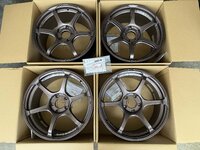
BRAND NEW original rare Yokohama ADVAN Racing RG4...
Started by
david tao
Chassis and Wheels
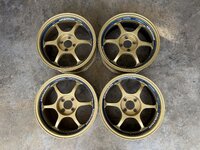
original rare Yokohama ADVAN Racing RZ2 RZii...
Started by
david tao
Chassis and Wheels
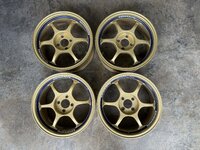
original rare Yokohama ADVAN Racing RG 16x7jj...
Started by
david tao
Chassis and Wheels
original rare Yokohama ADVAN Racing RG 16x7jj...
Started by
david tao
Chassis and Wheels
original rare Rays Volk Racing TE37SL 18x9jj offset...
Started by
david tao
Chassis and Wheels
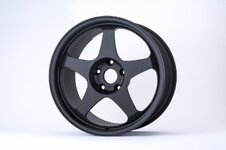
Spoon Sw388 18x10J+40 5H120 Rim Rims Civic FL5 Type R
Started by
aycy
Chassis and Wheels
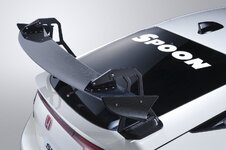
Spoon Crane Neck Wing Carbon Spoiler GT Wing Honda...
Started by
aycy
Exterior and Body
Honda Jazz/Fit GK Mugen body kit
Started by
jeff6126
Exterior and Body
original TWS Taneisya P1 racing 17x8.5jj offset +28...
Started by
david tao
Chassis and Wheels
original rare Rays Volk Racing CE28RT 18x9jj offset...
Started by
david tao
Chassis and Wheels
Posts refresh every 5 minutes
What is this ??
a pc of metal fell of my gear box oil ...any idea whats it ?? and how bad it gonna be ??
haltech e6x wanted
here serious buyer looking for haltech e6x with complete harness for evo 123.. do col/sms me at 0193049057..anytime
Proton aims for strong finish in Rally of Malaysia to kick start 2011 APRC campaign
https://www.zerotohundred.com/wp-content/uploads/2011/03/DSC_1932-800x536-600x402.jpg
The Malaysian leg of the 2011 Asia Pacific Rally Championship (APRC) gets underway this weekend and Proton is aiming for a strong...
Recent Posts
2026 Vios HEV launched with Local Battery Assembly - UMW Toyota Motor
Started by
The_Mechanic
News and Features
SPPF: The Future of Automotive Surface Protection - A Technical Overview
Started by
The_Mechanic
News and Features
Upping Wira 1.5 MMC performance
Started by
Nyfka
Car Modification
Volvo Malaysia Launches Locally Assembled ES90 Electric Sedan
Started by
The_Mechanic
News and Features
AMPANG mari!!ZTH member
Started by
shahaff_07
Groups and Meets
Search
Online now
Enjoying Zerotohundred?
Log-in
for an ad-less experience
Home
Forums
Main Forums
Interests
ICE
amp for DVC sub