Menu
Home
Post Something
Forums
Current Activity
New posts
Search forums
What's new
New posts
Latest activity
News & Features
The Marketplace
Cars for Sale
Engine and Performance
Chassis and Wheels
Exterior and Body
Interior and Cockpit
ICE - In Car Entertainment
Car Shops and Services
Toys and Wares
All Other Stuff
Jobs and Vacancies
Looking For
Members
Log in
Register
What's new
Search
Search
Search titles only
By:
Current Activity
New posts
Search forums
Menu
Log in
Register
Reply to thread
See what others are reading now! Try Forums >
Current Activity
Home
Forums
Car Brands
Car Manufacturers
Honda
B20-CRV VTEC - Why it Blows.....
JavaScript is disabled. For a better experience, please enable JavaScript in your browser before proceeding.
You are using an out of date browser. It may not display this or other websites correctly.
You should upgrade or use an
alternative browser
.
Message
<blockquote data-quote="Johnny_9" data-source="post: 2970227" data-attributes="member: 15696"><p>"In automobile development, the weight reduction is and always has been a significant and challenging issue. When the weight of the engine itself is to be reduced, the proportion of the weight reduction accounted for by the cylinder block is very large and thus very necessary," asserts Honda. The company has been vigorously developing and producing engines, many of whose major components are aluminum, particularly cylinder blocks. It adds, "Cast iron sleeves are being used as cylinder liners in more aluminum engines; this is an obstacle to further weight reduction." Some of the solutions Honda suggests are use of 1) a hyper-eutectic aluminum-silicon alloy (A390), 2) an aluminum liner on which Ni-SiC powdered dispersed plating is applied, and 3) a metal matrix composite, any of which enables the production of a linerless light-alloy cylinder block. At present, its cost is prohibitively high and its manufacturing process too complex for volume-production vehicle models.</p><p></p><p>So the more-commonly used technology is separate iron liners cast in the aluminum block, which in Honda engines requires at least a 9 mm minimum distance (web) between cylinders. These factors determine an engine's outer size in proportion to its cubic displacement, and there lies, literally, a rub.</p><p></p><p>In more practical considerations, Honda was readying its first compact sports utility vehicle, the CR-V, which would be produced, including its aluminum engine, at the company's Suzuka factory, the home of Civic cars. In fact, the CR-V, though a considerably larger vehicle, belongs to the broad Civic strategy that the company was pursuing, and that would produce more variants and derivatives.</p><p></p><p>The CR-V, with good off-road capability, would need an engine with about a 2.0-L displacement. Honda's type F20A engine of the Accord family, with its width of 694 mm, would not fit in the shell, and comes from another factory source. The engine must be of the compact type-B family, for the sporty Civic and Integra cars. The type B16A 1.6-L unit, and the B18B 1.8-L version, shared the same block with with the engine's overall width of 601 mm. The B18B's 1834-cc capacity was obtained by stroking the B16A to 89 mm. Further enlargement to a planned 2.0-L capacity could only be achieved by increasing the bore of the B18B, however, the engine's high-pressure die cast aluminum block with separate iron liners left no room for such enlargement. Thus the development of a new one-piece cast liner unit with four integrally cast cylinder liners came about, which Honda describes as "consecutive liner construction," or "quad-sequential sleeve block." It is more like Siamese-quadruplets. With this liner construction, the web distance, or distance between the inner walls of the adjoining cylinders, could be reduced to 6 mm from the separate lines' 9 mm, while retaining the same bore pitch. This was the essential requirement so that the new block could be cast and machined on the existing Suzuka lines. This enabled the addition of 3 mm to the bore, to 84 mm which, combined with the B18B's 89 mm stroke, increases the engine's cubic capacity to 1972 cc. Further, the increase in block mass is only 0.8 kg, from the B18B's 25.3 kg to 26.1 kg. Efforts were made to shave mass from other internal and external components of the B20B, achieving the end result of a total dry mass of 144.5 kg for the new engine, to the smaller displacement B18B's 148.1 kg, making it one of the lightest in its displacement category.</p><p></p><p>There were a number of technical problems that accompanied the new block construction that had to be solved. The main problems and solutions were as follows:</p><p></p><p>Deterioration in cylinder cooling because of the mono-liner construction--The liner connecting point between two cylinders is the most critical area that may be affected by different temperatures between the two materials, the aluminum block and the cast iron liner (there is no coolant passage in this area). A number of connecting point configurations were investigated at WOT at 6000 rpm. An optimized connecting point configuration with the least temperature rise in the area and in the aluminum portion was selected to ensure adequate cooling capability. </p><p>Casting gap that may develop between the iron liner and the aluminum block body during aluminum's solidification process--With the mono-liner, the direction of molten aluminum's solidification is different from that of casting-in separate liners. Residual stress exerts inwardly and fairly evenly in the case of separate liners, whereas with the mono-liner unit, its direction is outward along the aluminum casting's outer periphery, thus causing a separation or gap. Honda's solution was the casting of "spines," tiny cylindrical protrusions on the outer surfaces of the critical areas of the liners that ensure secure bonding of the two materials. Honda reports that gap occurrence has been reduced to one percent of what it would be without the spines. </p><p>Damaging of the casting and spine by residual stress--The spines receive solidification and contracting forces, thus the area around the liner wall connecting point is subjected to extremely high residual stress, which may damage the spines or crack the aluminum casing. A clamp placed atop each cylinder liner, that provides a path to molten aluminum, disperses concentration of stress, making it similar to that of a separate liner. </p><p>Liner distortion due to casting stress--In the mono-liner block casting, contracting force is greater in the X axis (the block's lengthwise direction), that may deform the cylinder bore shape. The mono-liner unit has calculated, slightly oblong circular shapes that re-form to true circular shapes during cooling. Further, the liner unit's bottom portion is subjected to higher solidification stress, bcause of larger aluminum mass in the area. The liner is, therefore, initially shaped as a frustum, which re-forms into a right circular cylinder in casting. </p><p>A senior Honda engineer says that mono-liner casting techniques had been presented in papers, the oldest by Ford to his knowledge, and some six years ago by Daihatsu; however, one has reached actual product application. Honda has applied for 13 patents comprising 44 items, according to the engineer.</p></blockquote><p></p>
[QUOTE="Johnny_9, post: 2970227, member: 15696"] "In automobile development, the weight reduction is and always has been a significant and challenging issue. When the weight of the engine itself is to be reduced, the proportion of the weight reduction accounted for by the cylinder block is very large and thus very necessary," asserts Honda. The company has been vigorously developing and producing engines, many of whose major components are aluminum, particularly cylinder blocks. It adds, "Cast iron sleeves are being used as cylinder liners in more aluminum engines; this is an obstacle to further weight reduction." Some of the solutions Honda suggests are use of 1) a hyper-eutectic aluminum-silicon alloy (A390), 2) an aluminum liner on which Ni-SiC powdered dispersed plating is applied, and 3) a metal matrix composite, any of which enables the production of a linerless light-alloy cylinder block. At present, its cost is prohibitively high and its manufacturing process too complex for volume-production vehicle models. So the more-commonly used technology is separate iron liners cast in the aluminum block, which in Honda engines requires at least a 9 mm minimum distance (web) between cylinders. These factors determine an engine's outer size in proportion to its cubic displacement, and there lies, literally, a rub. In more practical considerations, Honda was readying its first compact sports utility vehicle, the CR-V, which would be produced, including its aluminum engine, at the company's Suzuka factory, the home of Civic cars. In fact, the CR-V, though a considerably larger vehicle, belongs to the broad Civic strategy that the company was pursuing, and that would produce more variants and derivatives. The CR-V, with good off-road capability, would need an engine with about a 2.0-L displacement. Honda's type F20A engine of the Accord family, with its width of 694 mm, would not fit in the shell, and comes from another factory source. The engine must be of the compact type-B family, for the sporty Civic and Integra cars. The type B16A 1.6-L unit, and the B18B 1.8-L version, shared the same block with with the engine's overall width of 601 mm. The B18B's 1834-cc capacity was obtained by stroking the B16A to 89 mm. Further enlargement to a planned 2.0-L capacity could only be achieved by increasing the bore of the B18B, however, the engine's high-pressure die cast aluminum block with separate iron liners left no room for such enlargement. Thus the development of a new one-piece cast liner unit with four integrally cast cylinder liners came about, which Honda describes as "consecutive liner construction," or "quad-sequential sleeve block." It is more like Siamese-quadruplets. With this liner construction, the web distance, or distance between the inner walls of the adjoining cylinders, could be reduced to 6 mm from the separate lines' 9 mm, while retaining the same bore pitch. This was the essential requirement so that the new block could be cast and machined on the existing Suzuka lines. This enabled the addition of 3 mm to the bore, to 84 mm which, combined with the B18B's 89 mm stroke, increases the engine's cubic capacity to 1972 cc. Further, the increase in block mass is only 0.8 kg, from the B18B's 25.3 kg to 26.1 kg. Efforts were made to shave mass from other internal and external components of the B20B, achieving the end result of a total dry mass of 144.5 kg for the new engine, to the smaller displacement B18B's 148.1 kg, making it one of the lightest in its displacement category. There were a number of technical problems that accompanied the new block construction that had to be solved. The main problems and solutions were as follows: Deterioration in cylinder cooling because of the mono-liner construction--The liner connecting point between two cylinders is the most critical area that may be affected by different temperatures between the two materials, the aluminum block and the cast iron liner (there is no coolant passage in this area). A number of connecting point configurations were investigated at WOT at 6000 rpm. An optimized connecting point configuration with the least temperature rise in the area and in the aluminum portion was selected to ensure adequate cooling capability. Casting gap that may develop between the iron liner and the aluminum block body during aluminum's solidification process--With the mono-liner, the direction of molten aluminum's solidification is different from that of casting-in separate liners. Residual stress exerts inwardly and fairly evenly in the case of separate liners, whereas with the mono-liner unit, its direction is outward along the aluminum casting's outer periphery, thus causing a separation or gap. Honda's solution was the casting of "spines," tiny cylindrical protrusions on the outer surfaces of the critical areas of the liners that ensure secure bonding of the two materials. Honda reports that gap occurrence has been reduced to one percent of what it would be without the spines. Damaging of the casting and spine by residual stress--The spines receive solidification and contracting forces, thus the area around the liner wall connecting point is subjected to extremely high residual stress, which may damage the spines or crack the aluminum casing. A clamp placed atop each cylinder liner, that provides a path to molten aluminum, disperses concentration of stress, making it similar to that of a separate liner. Liner distortion due to casting stress--In the mono-liner block casting, contracting force is greater in the X axis (the block's lengthwise direction), that may deform the cylinder bore shape. The mono-liner unit has calculated, slightly oblong circular shapes that re-form to true circular shapes during cooling. Further, the liner unit's bottom portion is subjected to higher solidification stress, bcause of larger aluminum mass in the area. The liner is, therefore, initially shaped as a frustum, which re-forms into a right circular cylinder in casting. A senior Honda engineer says that mono-liner casting techniques had been presented in papers, the oldest by Ford to his knowledge, and some six years ago by Daihatsu; however, one has reached actual product application. Honda has applied for 13 patents comprising 44 items, according to the engineer. [/QUOTE]
Insert quotes…
Verification
Post reply
The Marketplace Latest
original FD2R akagakiracing titanium 2.75” exhaust...
Started by
david tao
Engine and Performance
original GT86 BRZ akagakiracing titanium 2.5”...
Started by
david tao
Engine and Performance
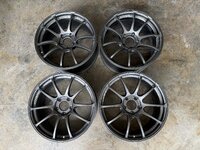
2pcs only, original rare spec Rays Volk Racing CE28...
Started by
david tao
Chassis and Wheels
original rare Yokohama ADVAN Racing RZ 18x8.5jj...
Started by
david tao
Chassis and Wheels
original rare spec Rays Volk Racing CE28 16x7jj...
Started by
david tao
Chassis and Wheels
Honda CITY 1.5 E (A)
Started by
PIstonHeads
Cars for sale
original BBS RE013 18x8jj offset +50 5H pcd 5x112...
Started by
david tao
Chassis and Wheels
original rare Yokohama ADVAN Racing RG3 18x8 18x8.5...
Started by
david tao
Chassis and Wheels
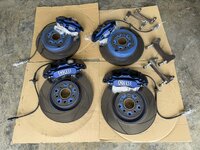
original Endless M4 S2 4pot 2pot brake caliper set...
Started by
david tao
Chassis and Wheels
original rare Yokohama ADVAN Racing RG2 17x8.5jj...
Started by
david tao
Chassis and Wheels
Posts refresh every 5 minutes
ATR power window problem
hi! Bro
my power window (front passenger site) recently get crazy, some time operate normal.
now no event can move.
please advice any ideal to reset the power window.
thank you
Honda Malaysia Set To Introduce The Freed Compact MPV Soon !!
https://www.zerotohundred.com/wp-content/uploads/2010/02/Honda-Freed.jpg
Honda Malaysia Sdn Bhd is set to introduce a new addition to an already impressive local vehicle line-up. Set to make an appearance...
garage defend carbon cooling plate
hey guys i have Garage defend carbon cooling pate for sale
i have it in stock now for - S15
- R33
-R34
each will cost 1300nego
pls call me 012 669 0525:adore...
Recent Posts
Darker Design : Mercedes-Benz Launches GLA Nightfall Edition in Malaysia
Started by
The_Mechanic
News and Features
Honda Malaysia Doubles Down on Hybrids: New CR-V Launches with Dual e:HEV...
Started by
The_Mechanic
News and Features
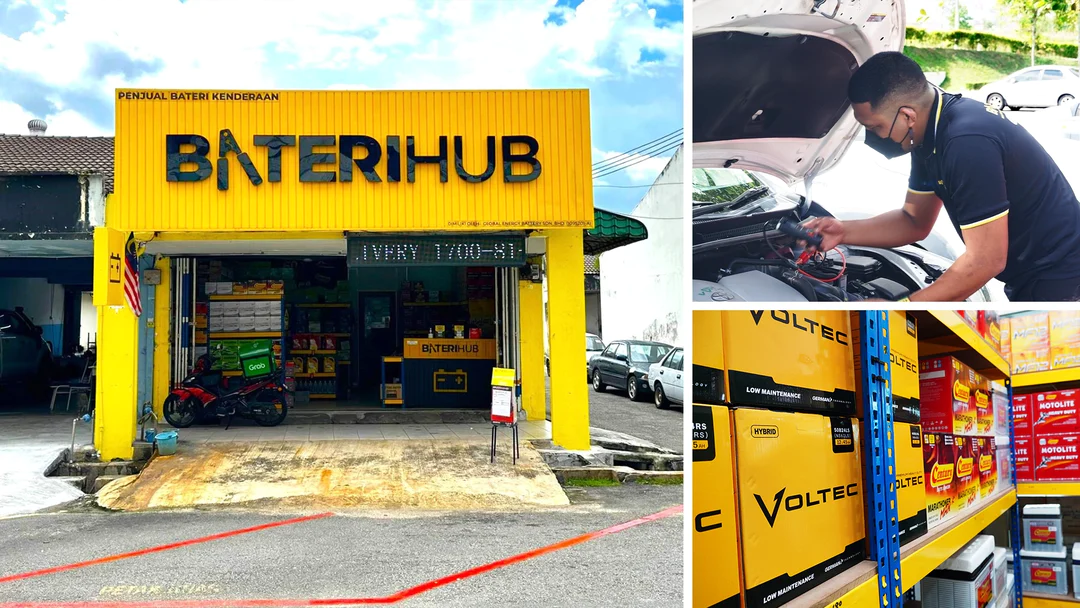
BateriHub Reaches 200-Store Milestone, Becomes Malaysia’s Largest...
Started by
The_Mechanic
News and Features
Been stalking for 3 years edy
Started by
dheepadarshan95
Introduction and Newbies
Recommendation: Turbocharger for 4B11 N.A engine
Started by
Mitevo7
Car Modification
Search
Online now
Enjoying Zerotohundred?
Log-in
for an ad-less experience
Home
Forums
Car Brands
Car Manufacturers
Honda
B20-CRV VTEC - Why it Blows.....