Menu
Home
Post Something
Forums
Current Activity
New posts
Search forums
What's new
New posts
Latest activity
News & Features
The Marketplace
Cars for Sale
Engine and Performance
Chassis and Wheels
Exterior and Body
Interior and Cockpit
ICE - In Car Entertainment
Car Shops and Services
Toys and Wares
All Other Stuff
Jobs and Vacancies
Looking For
Members
Log in
Register
What's new
Search
Search
Search titles only
By:
Current Activity
New posts
Search forums
Menu
Log in
Register
Reply to thread
See what others are reading now! Try Forums >
Current Activity
Home
Forums
Car Clubs
Car Club Categories
The Cefiro Club Malaysia
Cefiro Club
JavaScript is disabled. For a better experience, please enable JavaScript in your browser before proceeding.
You are using an out of date browser. It may not display this or other websites correctly.
You should upgrade or use an
alternative browser
.
Message
<blockquote data-quote="defcon1" data-source="post: 2021754" data-attributes="member: 30064"><p>Technically, this should not happen...</p><p></p><p>a) The amount of fuel injected is a function of the amount of air going into the engine. The amount of air is measured by the Mass Air Flow meter, this signal goes to the ECU, which triggers the injectors to inject fuel. </p><p></p><p>The metering of fuel is determined by the period of time the injector is turned on. The injector is basically a simple open/close valve. The ECU supplies current...the valve opens...fuel is under pressure, so it sprays out. No current, the valve closes. The time period is refered to as the injector timing pulse width.</p><p></p><p>Since the air flow meters of the 3.0L, 2.5L and the 2.0L are identical (I know since I am using a 2l one in my car), we can conclude that the signal for a given (constant) volume of air is identical.</p><p></p><p>Since both the 3L ECU and the 2.5L ECU are reading from similar devices, it must receive the same information for a given volume of air.</p><p></p><p>It will then provide the correct pulse width according to it's programmed fuel maps to accomodate the fixed volume of air.</p><p></p><p>Here is where it gets complicated....</p><p></p><p>A 3L ECU expects to find BIGGER injectors...hence, it should provide a shorter pulse width. A 2.5L ECU will expects to find SMALLER injectors, and hence, it should provide a longer pulse width.</p><p></p><p>So, it is likely that the motor should run lean, and not rich. BUT car makers have thought of this in the design of their platforms...</p><p></p><p>When at low speed/rpm, the motor runs in what is called a "closed loop" operation. This means that there is a feedback mechanism that sends a signal back to the ECU telling it if the mixture is too lean or too rich, and the ECU adjusts subsequent injections accordingly.</p><p></p><p>This feedback mechanism are the two O2 sensors you have on your outlet manifold...right at the bottom near or on the cat converters. It will detect a rich or lean mixture, and send it's readings back to the ECU for the ECU to interpret and take subsequent action.</p><p></p><p>So, in normal driving, some simple tuning should be enough to offset the fuel mixture issues.</p><p></p><p>However, at higher speeds, the ECU will stop relying on the O2 sensors as the engine is running too fast for proper interpretation of the feedback signals. Hence, the ECU will switch to an "open loop" operation i.e. injecting fuel according to pre-calculated values as determined by it's internal fuel map. In this situation, a 3L ECU (with 3L injectors) in a 2.5L motor will run rich. As the difference in capacities is 20%, it would be simple to tune this out with an SAFC 1.</p><p></p><p>I find this to be unnecessary as in my current configuration, I am running a fuel pressure (coupled with a high flow air filter) that basically guarantees at least 20% additional fuel availability in order to generate the additional power at higher engine rpm's.</p><p></p><p>It is more likely that somewhere in the conversion, some sensors were damaged, or the sensors on the 2.5L were out of order. The only reason the engine would run so rich would be :</p><p></p><p>a) Mass Air Flow meter no longer metering correctly. Can cause engine to run over-rich or over-lean. Unless the signal stops completely, this would not cause any warning lights on the dash.</p><p></p><p>b) O2 sensors not functioning correctly or functioning intermittently. In this situation, the ECU would run in "safe" mode and basically dump fuel and reduce engine timing in order to protect the engine. That would explain the "draggy" feeling when taking off. This would not trigger any warning lights on the dash, though if the sensor were really badly damaged, a "check engine" warning may occur, and an error code would appear (needs to be read with a special tool).</p><p></p><p>c) Water temp sensor damaged or burnt out. If the water temp sensor provides a "engine cold" signal to the ECU, higher fuel consumption would result as the ECU would increase injection in an effort to warm-up the engine. This would not trigger any warning lights on the dashboard.</p><p></p><p>d) ECU damaged. Timing retarded. If something has shorted out in the ECU, there is a fail-safe "map" that retards the motor and dumps fuel to keep the engine running safely. This is the "safe" or sometimes irritatingly referred to as the "limp" mode.</p><p></p><p>The wire harness differences are marginal for the two vehicles. There are some minor differences in plugs (easily solved by dismantling the plug...taking out the copper pins soldered to the wire and slotting into the "other" plug). Also some minor differences in the number of earth wires and earthing points on the motor.</p><p></p><p>This means that basically, the designs of both wire harnesses are identical.</p><p></p><p>One other possibility....</p><p></p><p>There is apparently a difference in the capacities of the fuel pumps between the 2.0L and the 3.0L. As I have never had the opportunity to see a 2.5L fuel pump, I cannot determine if it is different. It may be that the fuel pressure in the 3.0L is slightly higher than in the 2.5L. It is also likely that the 3L fuel pump has a higher flow rate than the 2.5L fuel pump...which may account for the rich air-fuel mixture.</p></blockquote><p></p>
[QUOTE="defcon1, post: 2021754, member: 30064"] Technically, this should not happen... a) The amount of fuel injected is a function of the amount of air going into the engine. The amount of air is measured by the Mass Air Flow meter, this signal goes to the ECU, which triggers the injectors to inject fuel. The metering of fuel is determined by the period of time the injector is turned on. The injector is basically a simple open/close valve. The ECU supplies current...the valve opens...fuel is under pressure, so it sprays out. No current, the valve closes. The time period is refered to as the injector timing pulse width. Since the air flow meters of the 3.0L, 2.5L and the 2.0L are identical (I know since I am using a 2l one in my car), we can conclude that the signal for a given (constant) volume of air is identical. Since both the 3L ECU and the 2.5L ECU are reading from similar devices, it must receive the same information for a given volume of air. It will then provide the correct pulse width according to it's programmed fuel maps to accomodate the fixed volume of air. Here is where it gets complicated.... A 3L ECU expects to find BIGGER injectors...hence, it should provide a shorter pulse width. A 2.5L ECU will expects to find SMALLER injectors, and hence, it should provide a longer pulse width. So, it is likely that the motor should run lean, and not rich. BUT car makers have thought of this in the design of their platforms... When at low speed/rpm, the motor runs in what is called a "closed loop" operation. This means that there is a feedback mechanism that sends a signal back to the ECU telling it if the mixture is too lean or too rich, and the ECU adjusts subsequent injections accordingly. This feedback mechanism are the two O2 sensors you have on your outlet manifold...right at the bottom near or on the cat converters. It will detect a rich or lean mixture, and send it's readings back to the ECU for the ECU to interpret and take subsequent action. So, in normal driving, some simple tuning should be enough to offset the fuel mixture issues. However, at higher speeds, the ECU will stop relying on the O2 sensors as the engine is running too fast for proper interpretation of the feedback signals. Hence, the ECU will switch to an "open loop" operation i.e. injecting fuel according to pre-calculated values as determined by it's internal fuel map. In this situation, a 3L ECU (with 3L injectors) in a 2.5L motor will run rich. As the difference in capacities is 20%, it would be simple to tune this out with an SAFC 1. I find this to be unnecessary as in my current configuration, I am running a fuel pressure (coupled with a high flow air filter) that basically guarantees at least 20% additional fuel availability in order to generate the additional power at higher engine rpm's. It is more likely that somewhere in the conversion, some sensors were damaged, or the sensors on the 2.5L were out of order. The only reason the engine would run so rich would be : a) Mass Air Flow meter no longer metering correctly. Can cause engine to run over-rich or over-lean. Unless the signal stops completely, this would not cause any warning lights on the dash. b) O2 sensors not functioning correctly or functioning intermittently. In this situation, the ECU would run in "safe" mode and basically dump fuel and reduce engine timing in order to protect the engine. That would explain the "draggy" feeling when taking off. This would not trigger any warning lights on the dash, though if the sensor were really badly damaged, a "check engine" warning may occur, and an error code would appear (needs to be read with a special tool). c) Water temp sensor damaged or burnt out. If the water temp sensor provides a "engine cold" signal to the ECU, higher fuel consumption would result as the ECU would increase injection in an effort to warm-up the engine. This would not trigger any warning lights on the dashboard. d) ECU damaged. Timing retarded. If something has shorted out in the ECU, there is a fail-safe "map" that retards the motor and dumps fuel to keep the engine running safely. This is the "safe" or sometimes irritatingly referred to as the "limp" mode. The wire harness differences are marginal for the two vehicles. There are some minor differences in plugs (easily solved by dismantling the plug...taking out the copper pins soldered to the wire and slotting into the "other" plug). Also some minor differences in the number of earth wires and earthing points on the motor. This means that basically, the designs of both wire harnesses are identical. One other possibility.... There is apparently a difference in the capacities of the fuel pumps between the 2.0L and the 3.0L. As I have never had the opportunity to see a 2.5L fuel pump, I cannot determine if it is different. It may be that the fuel pressure in the 3.0L is slightly higher than in the 2.5L. It is also likely that the 3L fuel pump has a higher flow rate than the 2.5L fuel pump...which may account for the rich air-fuel mixture. [/QUOTE]
Insert quotes…
Verification
Post reply
The Marketplace Latest
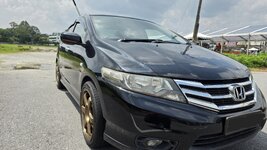
Honda CITY 1.5 E (A)
Started by
PIstonHeads
Cars for sale
original BBS RE013 18x8jj offset +50 5H pcd 5x112...
Started by
david tao
Chassis and Wheels
original rare Yokohama ADVAN Racing RG3 18x8 18x8.5...
Started by
david tao
Chassis and Wheels
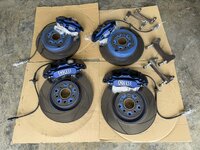
original Endless M4 S2 4pot 2pot brake caliper set...
Started by
david tao
Chassis and Wheels
original rare Yokohama ADVAN Racing RG2 17x8.5jj...
Started by
david tao
Chassis and Wheels
original rare WedsSport TC005 17x7jj offset +40 5H...
Started by
david tao
Chassis and Wheels
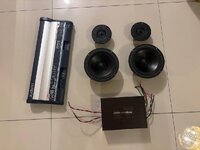
Vifa Speakers Audison Amp
Started by
samuel118
ICE -In Car Entertainment
original rare Yokohama ADVAN Racing RG3 18x8.5...
Started by
david tao
Chassis and Wheels
Carbing R35 GTR GTR35 Brake Master Cylinder Stopper
Started by
aycy
Engine and Performance
GR Corolla Hypertune Bolt On Intercooler
Started by
aycy
Engine and Performance
Posts refresh every 5 minutes
Evo 9 for 150K ??
Hi to all forumer ,
Recently I saw a evo 9 selling at 135K .Stock parts .No modification on the engine .I want to ask
1.Does the internal can be strip out left two recaro SPG seat in it only .No rear seat and two...
2010 mazdaspeed Rx-8 bodykit
If i bought a new version Rx-8 2010, then where i gonna find this bodykit from mazdaspeed?
View attachment 697496
Russian Car Accident - A Lesson
A lesson to be learnt while being on the road. Attached together a video clip uploaded in Youtube.Com by me, and also aftermath pictures. These are real identities and not...
Recent Posts
Honda Malaysia Doubles Down on Hybrids: New CR-V Launches with Dual e:HEV...
Started by
The_Mechanic
News and Features
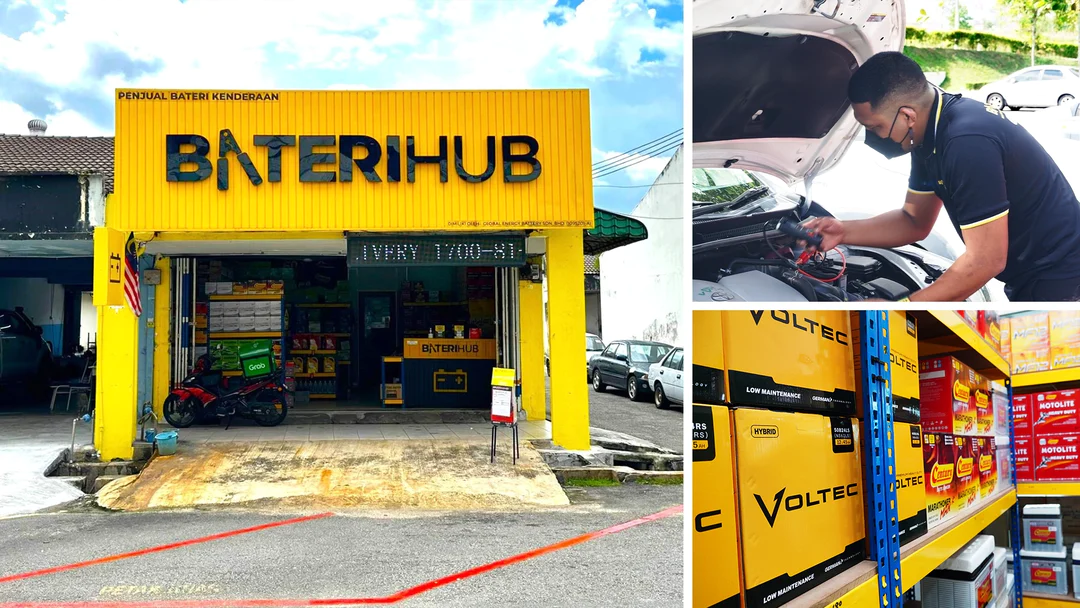
BateriHub Reaches 200-Store Milestone, Becomes Malaysia’s Largest...
Started by
The_Mechanic
News and Features
Been stalking for 3 years edy
Started by
dheepadarshan95
Introduction and Newbies
Recommendation: Turbocharger for 4B11 N.A engine
Started by
Mitevo7
Car Modification
2026 Vios HEV launched with Local Battery Assembly - UMW Toyota Motor
Started by
The_Mechanic
News and Features
Search
Online now
Enjoying Zerotohundred?
Log-in
for an ad-less experience
Home
Forums
Car Clubs
Car Club Categories
The Cefiro Club Malaysia
Cefiro Club