Menu
Home
Post Something
Forums
Current Activity
New posts
Search forums
What's new
New posts
Latest activity
News & Features
The Marketplace
Cars for Sale
Engine and Performance
Chassis and Wheels
Exterior and Body
Interior and Cockpit
ICE - In Car Entertainment
Car Shops and Services
Toys and Wares
All Other Stuff
Jobs and Vacancies
Looking For
Members
Log in
Register
What's new
Search
Search
Search titles only
By:
Current Activity
New posts
Search forums
Menu
Log in
Register
Reply to thread
See what others are reading now! Try Forums >
Current Activity
Home
Forums
Main Forums
Interests
Videos
How Bugatti Veyron assemble ?
JavaScript is disabled. For a better experience, please enable JavaScript in your browser before proceeding.
You are using an out of date browser. It may not display this or other websites correctly.
You should upgrade or use an
alternative browser
.
Message
<blockquote data-quote="dotcom" data-source="post: 1064000969" data-attributes="member: 14236"><p>The Veyron features an 8.0 litre, quad-turbocharged, W16 cylinder engine, equivalent to two narrow-angle V8 engines. Each cylinder has four valves for a total of sixty four, but the narrow staggered V8 configuration allows two overhead camshafts to drive two banks of cylinders so only four camshafts are needed. The engine is fed by four turbochargers and displaces 7,993 cubic centimetres (487.8 cu in), with a square 86 by 86 mm (3.4 by 3.4 in) bore and stroke.</p><p></p><p></p><p>First U.S. Bugatti Veyron on display in April 2006</p><p>The transmission is a dual-clutch direct-shift gearbox computer-controlled automatic with seven gear ratios, with magnesium paddles behind the steering wheel and a shift time of less than 150 milliseconds, built by Ricardo of England rather than Borg-Warner, who designed the six speed DSG used in the mainstream Volkswagen Group marques. The Veyron can be driven in either semi- or fully automatic mode. A replacement transmission for the Veyron costs just over US$120,000.[9] It also has permanent four wheel drive using the Haldex Traction system. It uses special Michelin PAX run-flat tyres, designed specifically to accommodate the Veyron's top speed, which cost US$25,000 per set.[9] The tyres can be removed from the rims only in France, a service which costs US$70,000.[9] Curb weight is 1,888 kilograms (4,162 lb).[10] This gives the car a power-to-weight ratio, according to Volkswagen Group's figures, of 446.3 metric horsepower (328 kW; 440 bhp) per ton.</p><p>The car's wheelbase is 2,710 mm (106.7 in). Overall length is 4,462 mm (175.7 in), width 1,998 mm (78.7 in) and height 1,204 mm (47.4 in). The Bugatti Veyron has a total of ten radiators:</p><p></p><p>3 heat exchangers for the air-to-liquid intercoolers.</p><p>3 engine radiators.</p><p>1 for the air conditioning system.</p><p>1 transmission oil radiator.</p><p>1 differential oil radiator.</p><p>1 engine oil radiator</p><p>It has a drag coefficient of 0.41 (normal condition) and 0.36 (after lowering to the ground),[12] and a frontal area of 2.07 square metres (22.3 sq ft).[13] This gives it a drag area – the combination of drag coefficient and frontal area, represented as CdA – of 0.74 m2 (8.0 sq ft).</p><p></p><p><strong>Engine output</strong></p><p>According to Volkswagen Group and certified by TÜV Süddeutschland, the final production Veyron engine produces 1,001 metric horsepower (736 kW; 987 bhp) of motive power, and generates 1,250 newton metres (922 lbf·ft) of torque.[1][14] The nominal figure has been stated by Bugatti officials to be conservative, with the real total being 1,020 metric horsepower (750 kW; 1,006 bhp) or more.</p><p></p><p><strong>Top speed</strong></p><p>German inspection officials recorded an average top speed of the original version of 408.47 km/h (253.81 mph)[5] during test sessions on the Ehra-Lessien test track on 19 April 2005.</p><p>This top speed was verified by James May on Top Gear in November 2006, again at Volkswagen Group's private Ehra-Lessien test track. May noted that at top speed the engine consumes 45,000 litres (9,900 imp gal) of air per minute (as much as a human breathes in four days). The Veyron at the time had the highest top speed of any street legal production car. Back in the Top Gear studio, co-presenter Jeremy Clarkson commented that most supercars felt like they were shaking apart at their top speed, and asked May if that was the case with the Veyron at 407 km/h (253 mph). May responded that no, the Veyron was very controlled, and only wobbled a tiny bit when the air brake deployed. May further commented, “Absolutely yeah, it’s totally undramatic. But I would give you a bit of a warning: It’s a bit disorientating doing that sort of speed, because after I came off the banking, I was slowing down to stop, and you know how you get a bit impatient and think ‘I’ll just open the door’; fortunately I looked back at the speedo, and I was still doing seventy.”[15]</p><p>The car's everyday top speed is listed at 350 km/h (220 mph). When the car reaches 220 km/h (140 mph), hydraulics lower the car until it has a ground clearance of about 9 cm (3.5 in). At the same time, the wing and spoiler deploy. In this handling mode the wing provides 3,425 newtons (770 lbf) of downforce, holding the car to the road.</p><p>For top speed mode the driver must, while at rest, toggle a special top speed key to the left of the driver's seat. A checklist then establishes whether the car and its driver are ready to attempt to reach 407 km/h (253 mph). If so, the rear spoiler retracts, the front air diffusers shut, and normal 12.5 cm (4.9 in) ground clearance drops to 6.5 cm (2.6 in).</p><p></p><p></p><p><strong>Braking</strong></p><p>The Veyron's brakes use cross drilled, radially vented carbon fibre reinforced silicon carbide (C/SiC) composite discs, manufactured by SGL Carbon, which have a much greater resistance to brake fade when compared with conventional cast iron discs. The lightweight aluminium alloy monobloc brake calipers are made by AP Racing; the fronts have eight[11] titanium pistons and the rear calipers have six pistons. Bugatti claims maximum deceleration of 1.3 g's on road tyres. As an added safety feature, in the event of brake failure, an anti-lock braking system (ABS) has also been installed on the handbrake.</p><p></p><p>Prototypes have been subjected to repeated 1.0 g braking from 312 km/h (194 mph) to 80 km/h (50 mph) without fade. With the car's acceleration from 80 km/h (50 mph) to 312 km/h (194 mph), that test can be performed every 22 seconds. At speeds above 200 km/h (120 mph), the rear wing also acts as an airbrake, snapping to a 55° angle in 0.4 seconds once brakes are applied, providing an additional 0.68 g (6.66 m/s2) of deceleration (equivalent to the stopping power of an ordinary hatchback).[11] Bugatti claims the Veyron will brake from 400 km/h (250 mph) to a standstill in less than 10 seconds, though distance covered in this time will be half of a kilometer (third of a mile).</p><p></p><p>Sources: National.Geographic N WikiPedia</p></blockquote><p></p>
[QUOTE="dotcom, post: 1064000969, member: 14236"] The Veyron features an 8.0 litre, quad-turbocharged, W16 cylinder engine, equivalent to two narrow-angle V8 engines. Each cylinder has four valves for a total of sixty four, but the narrow staggered V8 configuration allows two overhead camshafts to drive two banks of cylinders so only four camshafts are needed. The engine is fed by four turbochargers and displaces 7,993 cubic centimetres (487.8 cu in), with a square 86 by 86 mm (3.4 by 3.4 in) bore and stroke. First U.S. Bugatti Veyron on display in April 2006 The transmission is a dual-clutch direct-shift gearbox computer-controlled automatic with seven gear ratios, with magnesium paddles behind the steering wheel and a shift time of less than 150 milliseconds, built by Ricardo of England rather than Borg-Warner, who designed the six speed DSG used in the mainstream Volkswagen Group marques. The Veyron can be driven in either semi- or fully automatic mode. A replacement transmission for the Veyron costs just over US$120,000.[9] It also has permanent four wheel drive using the Haldex Traction system. It uses special Michelin PAX run-flat tyres, designed specifically to accommodate the Veyron's top speed, which cost US$25,000 per set.[9] The tyres can be removed from the rims only in France, a service which costs US$70,000.[9] Curb weight is 1,888 kilograms (4,162 lb).[10] This gives the car a power-to-weight ratio, according to Volkswagen Group's figures, of 446.3 metric horsepower (328 kW; 440 bhp) per ton. The car's wheelbase is 2,710 mm (106.7 in). Overall length is 4,462 mm (175.7 in), width 1,998 mm (78.7 in) and height 1,204 mm (47.4 in). The Bugatti Veyron has a total of ten radiators: 3 heat exchangers for the air-to-liquid intercoolers. 3 engine radiators. 1 for the air conditioning system. 1 transmission oil radiator. 1 differential oil radiator. 1 engine oil radiator It has a drag coefficient of 0.41 (normal condition) and 0.36 (after lowering to the ground),[12] and a frontal area of 2.07 square metres (22.3 sq ft).[13] This gives it a drag area – the combination of drag coefficient and frontal area, represented as CdA – of 0.74 m2 (8.0 sq ft). [B]Engine output[/B] According to Volkswagen Group and certified by TÜV Süddeutschland, the final production Veyron engine produces 1,001 metric horsepower (736 kW; 987 bhp) of motive power, and generates 1,250 newton metres (922 lbf·ft) of torque.[1][14] The nominal figure has been stated by Bugatti officials to be conservative, with the real total being 1,020 metric horsepower (750 kW; 1,006 bhp) or more. [B]Top speed[/B] German inspection officials recorded an average top speed of the original version of 408.47 km/h (253.81 mph)[5] during test sessions on the Ehra-Lessien test track on 19 April 2005. This top speed was verified by James May on Top Gear in November 2006, again at Volkswagen Group's private Ehra-Lessien test track. May noted that at top speed the engine consumes 45,000 litres (9,900 imp gal) of air per minute (as much as a human breathes in four days). The Veyron at the time had the highest top speed of any street legal production car. Back in the Top Gear studio, co-presenter Jeremy Clarkson commented that most supercars felt like they were shaking apart at their top speed, and asked May if that was the case with the Veyron at 407 km/h (253 mph). May responded that no, the Veyron was very controlled, and only wobbled a tiny bit when the air brake deployed. May further commented, “Absolutely yeah, it’s totally undramatic. But I would give you a bit of a warning: It’s a bit disorientating doing that sort of speed, because after I came off the banking, I was slowing down to stop, and you know how you get a bit impatient and think ‘I’ll just open the door’; fortunately I looked back at the speedo, and I was still doing seventy.”[15] The car's everyday top speed is listed at 350 km/h (220 mph). When the car reaches 220 km/h (140 mph), hydraulics lower the car until it has a ground clearance of about 9 cm (3.5 in). At the same time, the wing and spoiler deploy. In this handling mode the wing provides 3,425 newtons (770 lbf) of downforce, holding the car to the road. For top speed mode the driver must, while at rest, toggle a special top speed key to the left of the driver's seat. A checklist then establishes whether the car and its driver are ready to attempt to reach 407 km/h (253 mph). If so, the rear spoiler retracts, the front air diffusers shut, and normal 12.5 cm (4.9 in) ground clearance drops to 6.5 cm (2.6 in). [B]Braking[/B] The Veyron's brakes use cross drilled, radially vented carbon fibre reinforced silicon carbide (C/SiC) composite discs, manufactured by SGL Carbon, which have a much greater resistance to brake fade when compared with conventional cast iron discs. The lightweight aluminium alloy monobloc brake calipers are made by AP Racing; the fronts have eight[11] titanium pistons and the rear calipers have six pistons. Bugatti claims maximum deceleration of 1.3 g's on road tyres. As an added safety feature, in the event of brake failure, an anti-lock braking system (ABS) has also been installed on the handbrake. Prototypes have been subjected to repeated 1.0 g braking from 312 km/h (194 mph) to 80 km/h (50 mph) without fade. With the car's acceleration from 80 km/h (50 mph) to 312 km/h (194 mph), that test can be performed every 22 seconds. At speeds above 200 km/h (120 mph), the rear wing also acts as an airbrake, snapping to a 55° angle in 0.4 seconds once brakes are applied, providing an additional 0.68 g (6.66 m/s2) of deceleration (equivalent to the stopping power of an ordinary hatchback).[11] Bugatti claims the Veyron will brake from 400 km/h (250 mph) to a standstill in less than 10 seconds, though distance covered in this time will be half of a kilometer (third of a mile). Sources: National.Geographic N WikiPedia [/QUOTE]
Insert quotes…
Verification
Post reply
The Marketplace Latest
original rare Yokohama ADVAN Racing TC4 18x8.5...
Started by
david tao
Chassis and Wheels
original rare Rays Volk Racing ZE40 17x9jj offset...
Started by
david tao
Chassis and Wheels
original rare Rays Volk Racing INGS TS06 18x8jj...
Started by
david tao
Chassis and Wheels
New original Defi Advance A1 NA package triple...
Started by
david tao
Engine and Performance
original rare Rays Volk Racing CE28 16x7jj offset...
Started by
david tao
Chassis and Wheels
Honda Jazz/Fit JSracing GTwing Spoiler
Started by
jeff6126
Exterior and Body
Toyota Vios NCP93 front bonnet hood
Started by
jeff6126
Exterior and Body
Honda civic fc varis spoiler
Started by
jeff6126
Exterior and Body
BMW F10 Msport front bumper set
Started by
jeff6126
Exterior and Body
BMW F30 M3/GTS front bonnet hood
Started by
jeff6126
Exterior and Body
Posts refresh every 5 minutes
wideband or dyno tuning?
which one better for daily use car? I am driving n/a car with afc neo. thanks. If those in Penang, please recommend me which tuner is good.
wtb
Nissan Skyline R34 Gtr Rims!
skyline r34 rims?
anyone?how much?
rubber lining on iswara?i dont know what do u call these..
http://photos1.blogger.com/img/190/3908/640/17.jpg
i'm planning to change it to black colour..currently its like grey colour..n i though can be done...
Recent Posts
Darker Design : Mercedes-Benz Launches GLA Nightfall Edition in Malaysia
Started by
The_Mechanic
News and Features
Honda Malaysia Doubles Down on Hybrids: New CR-V Launches with Dual e:HEV...
Started by
The_Mechanic
News and Features
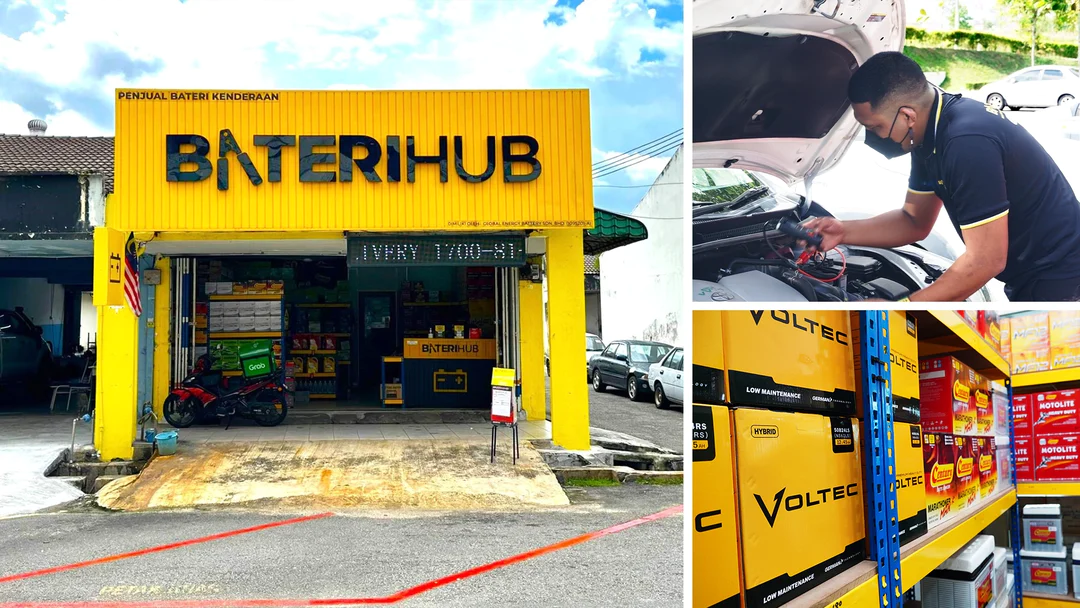
BateriHub Reaches 200-Store Milestone, Becomes Malaysia’s Largest...
Started by
The_Mechanic
News and Features
Been stalking for 3 years edy
Started by
dheepadarshan95
Introduction and Newbies
Recommendation: Turbocharger for 4B11 N.A engine
Started by
Mitevo7
Car Modification
Search
Online now
Enjoying Zerotohundred?
Log-in
for an ad-less experience
Home
Forums
Main Forums
Interests
Videos
How Bugatti Veyron assemble ?