Menu
Home
Post Something
Forums
Current Activity
New posts
Search forums
What's new
New posts
Latest activity
News & Features
The Marketplace
Cars for Sale
Engine and Performance
Chassis and Wheels
Exterior and Body
Interior and Cockpit
ICE - In Car Entertainment
Car Shops and Services
Toys and Wares
All Other Stuff
Jobs and Vacancies
Looking For
Members
Log in
Register
What's new
Search
Search
Search titles only
By:
Current Activity
New posts
Search forums
Menu
Log in
Register
Reply to thread
See what others are reading now! Try Forums >
Current Activity
Home
Forums
Main Forums
Interests
Do-It-Yourself Garage
How To Diy A Micro Compressor?
JavaScript is disabled. For a better experience, please enable JavaScript in your browser before proceeding.
You are using an out of date browser. It may not display this or other websites correctly.
You should upgrade or use an
alternative browser
.
Message
<blockquote data-quote="servo" data-source="post: 83801" data-attributes="member: 1665"><p><span style="color: blue"><u><strong>POSITIVE CRANKCASE VENTILATION</strong></u></span></p><p></p><p>Positive Crankcase Ventilation valves, aka PCV valves. They pull fresh air into the engine’s crankcase and draw fumes out. They’re small, they’re inexpensive but oh can <strong><span style="color: orange">they play havoc with an engine</span>. </strong><span style="color: orange"><strong>PCV systems control harmful fumes emitted from hot oil, and combustion gasses from burning fuel.</strong></span> Both are normal. Before PCV these fumes were expelled into the atmosphere and contributed substantially to automotive-based air pollution.<span style="color: orange"><strong>Today PCV systems are standard equipment; they remove crankcase pollutants, which are then destroyed through a re-burning process.</strong></span></p><p></p><p><strong><span style="color: orange">It works like this. Engines produce vacuum, which is just like the suction a vacuum cleaner produces at the end of its hose. Vacuum = Suction! Engineers take advantage of engine vacuum to suck fumes out of an engine’s crankcase. Not only does this eliminate pollutants, it maintains a vacuum inside the engine.</span></strong></p><p></p><p>The biggest problems with PCV systems are lack of knowledge and poor maintenance. Without routine testing and maintenance, PCV systems quit working which could mean failed emissions (high carbon monoxide and possibly hydrocarbon readings), stalling, lowered fuel mileage, rough idle, hesitation, illuminated “check engine light,” oil-soaked air filters, and oil leaks.</p><p></p><p><span style="color: orange"><strong>What about engine crankcase vacuum, how does it affect things? When a PCV system is working right there will always be a vacuum (suction) inside the engine’s crankcase. But, when the PCV system isn’t working, vacuum becomes pressure. That’s a problem because engine seals and gaskets are designed to work under vacuum, therefore when vacuum turns to pressure it can cause oil to be forced past seals. In severe cases, crankcase pressure causes seals and gaskets to literally be pushed out of the engine resulting in an oil hemorrhage.</strong></span></p><p></p><p>With stakes so high, why are PCV systems almost universally ignored? Usually lack of knowledge and to add insult to injury, even when a check is performed it’s usually only the PCV valve, not the entire system. A PCV system is composed of a PCV valve, usually a hose to connect the valve to a vacuum source, a second hose for incoming air, and a filter to clean incoming air. All PCV parts must be checked on a regular basis. Always replace your PCV valve and check the rest of the system at least once every year or 12,000 miles. </p><p></p><p>Somewhere over the eons it became an accepted but erroneous assumption that if a PCV valve rattled when shook, everything was okay. That little tidbit of misinformation can be costly. Checking a PCV system involves much more than just shaking the valve. PCV testing is best left to experts but for a quick and dirty do-it-yourself check, start by disconnecting the hose for incoming air, usually at the air filter housing. With the engine idling there must be sufficient vacuum to firmly hold a business card to the end of the hose. If there isn’t enough vacuum to hold the card in place it’s time to visit a repair shop. But don’t say fix it until you’re sure they understand PCV systems.</p><p></p><p>PCV --- small parts, obscure parts, parts that can cause hundreds of dollars worth of damage in a matter of minutes if they don’t work properly.</p><p></p><p></p><p><span style="color: blue"><u><strong>POSITIVE CRANKCASE VENTILATION</strong></u></span></p><p></p><p>http://autorepair.about.com/library/graphics/pcv.jpg</p><p></p><p>Definition: A means of controlling crankcase blowby emissions and removing moisture condensation from the crankcase to prolong oil life. See PCV valve. Related Terms </p><p>• Emission Control System</p><p>• PCV Valve</p><p></p><p></p><p>...FYI...... :unsure:</p></blockquote><p></p>
[QUOTE="servo, post: 83801, member: 1665"] [color=blue][u][b]POSITIVE CRANKCASE VENTILATION[/b][/u][/color] Positive Crankcase Ventilation valves, aka PCV valves. They pull fresh air into the engine’s crankcase and draw fumes out. They’re small, they’re inexpensive but oh can [b][color=orange]they play havoc with an engine[/color]. [/b][color=orange][b]PCV systems control harmful fumes emitted from hot oil, and combustion gasses from burning fuel.[/b][/color][b][/b] Both are normal. Before PCV these fumes were expelled into the atmosphere and contributed substantially to automotive-based air pollution.[color=orange][b]Today PCV systems are standard equipment; they remove crankcase pollutants, which are then destroyed through a re-burning process.[/b][/color] [b][color=orange]It works like this. Engines produce vacuum, which is just like the suction a vacuum cleaner produces at the end of its hose. Vacuum = Suction! Engineers take advantage of engine vacuum to suck fumes out of an engine’s crankcase. Not only does this eliminate pollutants, it maintains a vacuum inside the engine.[/color][/b] The biggest problems with PCV systems are lack of knowledge and poor maintenance. Without routine testing and maintenance, PCV systems quit working which could mean failed emissions (high carbon monoxide and possibly hydrocarbon readings), stalling, lowered fuel mileage, rough idle, hesitation, illuminated “check engine light,” oil-soaked air filters, and oil leaks. [color=orange][b]What about engine crankcase vacuum, how does it affect things? When a PCV system is working right there will always be a vacuum (suction) inside the engine’s crankcase. But, when the PCV system isn’t working, vacuum becomes pressure. That’s a problem because engine seals and gaskets are designed to work under vacuum, therefore when vacuum turns to pressure it can cause oil to be forced past seals. In severe cases, crankcase pressure causes seals and gaskets to literally be pushed out of the engine resulting in an oil hemorrhage.[/b][/color] With stakes so high, why are PCV systems almost universally ignored? Usually lack of knowledge and to add insult to injury, even when a check is performed it’s usually only the PCV valve, not the entire system. A PCV system is composed of a PCV valve, usually a hose to connect the valve to a vacuum source, a second hose for incoming air, and a filter to clean incoming air. All PCV parts must be checked on a regular basis. Always replace your PCV valve and check the rest of the system at least once every year or 12,000 miles. Somewhere over the eons it became an accepted but erroneous assumption that if a PCV valve rattled when shook, everything was okay. That little tidbit of misinformation can be costly. Checking a PCV system involves much more than just shaking the valve. PCV testing is best left to experts but for a quick and dirty do-it-yourself check, start by disconnecting the hose for incoming air, usually at the air filter housing. With the engine idling there must be sufficient vacuum to firmly hold a business card to the end of the hose. If there isn’t enough vacuum to hold the card in place it’s time to visit a repair shop. But don’t say fix it until you’re sure they understand PCV systems. PCV --- small parts, obscure parts, parts that can cause hundreds of dollars worth of damage in a matter of minutes if they don’t work properly. [color=blue][u][b]POSITIVE CRANKCASE VENTILATION[/b][/u][/color] http://autorepair.about.com/library/graphics/pcv.jpg Definition: A means of controlling crankcase blowby emissions and removing moisture condensation from the crankcase to prolong oil life. See PCV valve. Related Terms • Emission Control System • PCV Valve ...FYI...... :unsure: [/QUOTE]
Insert quotes…
Verification
Post reply
The Marketplace Latest
original rare Black Racing Pro N1 16x6.5jj offset...
Started by
david tao
Chassis and Wheels
original rare Rays Volk Racing TE37SL Black Edition...
Started by
david tao
Chassis and Wheels
Honda city JSracing gtwing spoiler
Started by
jeff6126
Exterior and Body
Honda civic fd ~car spray(Ferrari red)
Started by
jeff6126
Exterior and Body
Honda jazz fit gk flrs body kit
Started by
jeff6126
Exterior and Body
BMW F10 ~M5 front skirt lip with glossy black
Started by
jeff6126
Exterior and Body
Kia Forte gtwing spoiler
Started by
jeff6126
Exterior and Body
BMW F30 M3 front skirt lip
Started by
jeff6126
Exterior and Body
Proton Saga VVT Evo Front Bonnet Hood
Started by
jeff6126
Exterior and Body
Perodua bezza gear up body kit/spoiler
Started by
jeff6126
Exterior and Body
Posts refresh every 5 minutes
Review: Goodyear Eagle F1 Directional 5 - The Ultra High Performance tyre, Almost.
It's been a couple of months and over 2000kms with Goodyear's Eagle F1 Directional 5 tyres on the MINI and the experience...
Looking for Angel Eye or Smoke Eye
Halloo bro....
I'm looking for the above item, please do pm me your pricing and conditions of the item....thanks in advance...
Btw, if you have the TRD front spoiler please do pm me as well....
Cheers..
The rising cost of carbonfibre
http://www.grandprix.com/jpeg/phc/pmal07/fri/mechanic1-lg.jpg
The current worldwide shortage of carbonfibre is going to make it more difficult and more expensive to build racing cars, until supply catches up with...
Recent Posts
Darker Design : Mercedes-Benz Launches GLA Nightfall Edition in Malaysia
Started by
The_Mechanic
News and Features
Honda Malaysia Doubles Down on Hybrids: New CR-V Launches with Dual e:HEV...
Started by
The_Mechanic
News and Features
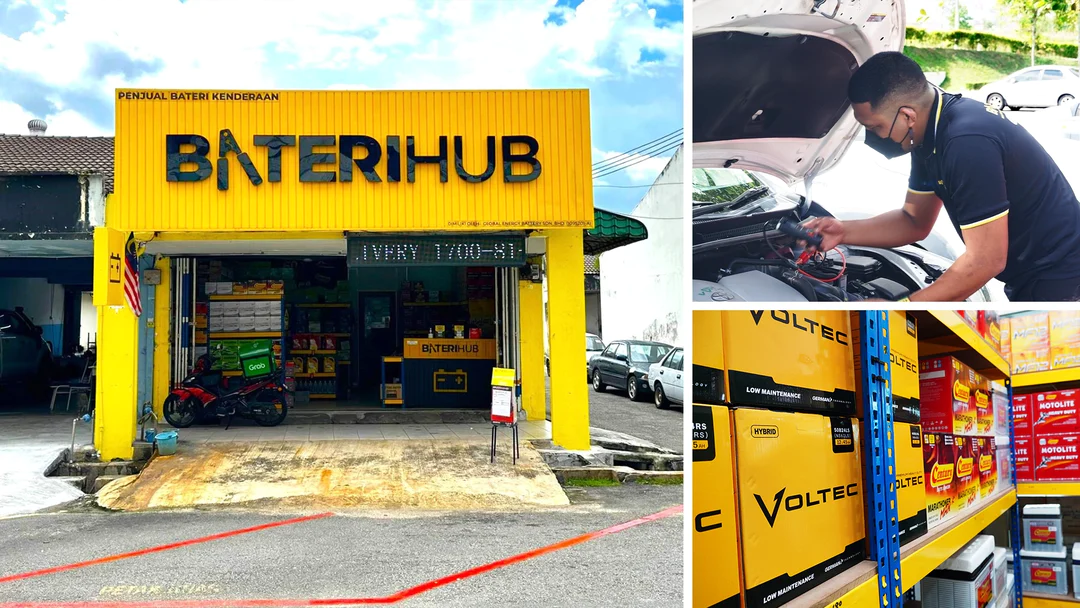
BateriHub Reaches 200-Store Milestone, Becomes Malaysia’s Largest...
Started by
The_Mechanic
News and Features
Been stalking for 3 years edy
Started by
dheepadarshan95
Introduction and Newbies
Recommendation: Turbocharger for 4B11 N.A engine
Started by
Mitevo7
Car Modification
Search
Online now
Enjoying Zerotohundred?
Log-in
for an ad-less experience
Home
Forums
Main Forums
Interests
Do-It-Yourself Garage
How To Diy A Micro Compressor?