Menu
Home
Post Something
Forums
Current Activity
New posts
Search forums
What's new
New posts
Latest activity
News & Features
The Marketplace
Cars for Sale
Engine and Performance
Chassis and Wheels
Exterior and Body
Interior and Cockpit
ICE - In Car Entertainment
Car Shops and Services
Toys and Wares
All Other Stuff
Jobs and Vacancies
Looking For
Members
Log in
Register
What's new
Search
Search
Search titles only
By:
Current Activity
New posts
Search forums
Menu
Log in
Register
Reply to thread
See what others are reading now! Try Forums >
Current Activity
Home
Forums
Main Forums
General Talk
Isuzu 4x4
JavaScript is disabled. For a better experience, please enable JavaScript in your browser before proceeding.
You are using an out of date browser. It may not display this or other websites correctly.
You should upgrade or use an
alternative browser
.
Message
<blockquote data-quote="ken12292703" data-source="post: 477767" data-attributes="member: 32"><p>Hie,</p><p></p><p>Let the smoke tell you what's going on in your engine!</p><p></p><p>Presuming it will run, you can tell a lot about what is going on in the engine by looking at the exhaust. Many problems either present or slowly coming on can be diagnosed by the exhaust smoke. </p><p></p><p>All diesels will throw a little excess black smoke when accelerating. That is normal as it takes the system a little time to develop the RPM and power necessary to burn all the fuel being provided. Remember, the governor immediately provides whatever fuel is needed to get to a given RPM. If the engine can't get to that RPM the governor just keeps throwing more fuel at the engine to try!. If the engine smokes much more than a very faint cloud during operation it means something is probably not right. Here is what to look for:</p><p></p><p>Black smoke is generally be caused when the fuel does not burn completely and the partially burned particles are expelled in the exhaust. When this occurs it means the engine cannot reach the RPM that is being called for by the governor in one or more of the cylinder. There are two reasons for this:</p><p></p><p>1. The load exceed the power capability of the engine</p><p>2. A Load within the power capability of the engine cannot be handled because of something wrong in the basic engine system (IE compression or air/fuel mixture)</p><p></p><p>The first thing to check for is an air inlet restriction such as from a plugged air cleaner. Take off the air filter and make sure the intake port is clear. If the engine still smokes with the port clear and the filter off, the problem is elsewhere.</p><p></p><p>Injector malfunction is also a potential common cause for black smoke as is incorrect engine timing. For example in a two cylinder engine, if you have one bad injector, the system cannot develop the RPM to burn the fuel called for since the properly fueled injector is working against an essentially dead or less than efficient cylinder. A poor cylinder will put out black smoke if it is getting fuel because compression problems prevent complete combustion. The good cylinder will put out smoke because it is being supplied more fuel than it can effectively use. you may be advised to remove the injectors and have them checked at a competent shop.</p><p></p><p>To check compression, you will need a compression gauge that can measure pressures over 500 PSI. Additionally, since diesels have no spark plug holes through which you can test compression, you must accomplish this be removing the injectors and using those ports. You will need a special fitting to use the injector port from testing. If you have a compression problem, it could be caused by bad rings/cylinders, valves or valve guides (or unusually, a hole in a piston).</p><p></p><p>Typically, if you have a problem with valve guides, you will have a lot of "blow by". IE the crank case will be pressurized and you will see pulsing puffs of exhaust coming out of the engine crankcase breather.</p><p></p><p>You can determine if you have bad rings/cylinders only by inspection, However if you pull the head and find the valves in good condition, you'll know they are bad. By the way, before you pull the head, check for valve clearance and make sure all of the valves operate.</p><p></p><p>White smoke usually occurs when there is not enough temperature to burn the fuel. The unburned fuel particles are then exhausted usually by a rich fuel smell. In cold weather it is not uncommon to get white smoke until engine temperature builds up. Low engine cranking speed can also create an excessive amount of white smoke.</p><p></p><p>If the problem persists after the engine is up to operating temperature several other things should be checked. A faulty injector can cause white smoke. Timing is often a factor when white smoke is excessive. Low engine compression can cause the problem and the injection pump can also have problems that result in white smoke. Air in the fuel system can also result in white smoke.</p><p></p><p>Lastly steam cause by a head gasket or other water leak into the combustion system can disguise itself as smoke. Steam will dissipate rapidly being once it hits lower temperature ambient air while smoke will persist and hand in the air.</p><p></p><p>Blue smoke is a sign of lubricating oil being burned by your engine. If you have blue smoke mainly at start up and it is very minor while running, this points to worn valve guides. When the engine sits for a bit (over night etc), oil left in the head after running can seep down into the combustion chamber. Upon start the bulk of it is burned quickly. </p><p></p><p>If you see blue smoke all the time when running, odds are you have a problem with rings or cylinders or both. All though sometimes a little solvent in the cylinders left overnight may free rings stuck up with carbon, usually, you will have to pull the engine and rebuild it to get things back to normal.</p><p></p><p>Hehe, copy paste from somewhere. Quite useful. :)</p></blockquote><p></p>
[QUOTE="ken12292703, post: 477767, member: 32"] Hie, Let the smoke tell you what's going on in your engine! Presuming it will run, you can tell a lot about what is going on in the engine by looking at the exhaust. Many problems either present or slowly coming on can be diagnosed by the exhaust smoke. All diesels will throw a little excess black smoke when accelerating. That is normal as it takes the system a little time to develop the RPM and power necessary to burn all the fuel being provided. Remember, the governor immediately provides whatever fuel is needed to get to a given RPM. If the engine can't get to that RPM the governor just keeps throwing more fuel at the engine to try!. If the engine smokes much more than a very faint cloud during operation it means something is probably not right. Here is what to look for: Black smoke is generally be caused when the fuel does not burn completely and the partially burned particles are expelled in the exhaust. When this occurs it means the engine cannot reach the RPM that is being called for by the governor in one or more of the cylinder. There are two reasons for this: 1. The load exceed the power capability of the engine 2. A Load within the power capability of the engine cannot be handled because of something wrong in the basic engine system (IE compression or air/fuel mixture) The first thing to check for is an air inlet restriction such as from a plugged air cleaner. Take off the air filter and make sure the intake port is clear. If the engine still smokes with the port clear and the filter off, the problem is elsewhere. Injector malfunction is also a potential common cause for black smoke as is incorrect engine timing. For example in a two cylinder engine, if you have one bad injector, the system cannot develop the RPM to burn the fuel called for since the properly fueled injector is working against an essentially dead or less than efficient cylinder. A poor cylinder will put out black smoke if it is getting fuel because compression problems prevent complete combustion. The good cylinder will put out smoke because it is being supplied more fuel than it can effectively use. you may be advised to remove the injectors and have them checked at a competent shop. To check compression, you will need a compression gauge that can measure pressures over 500 PSI. Additionally, since diesels have no spark plug holes through which you can test compression, you must accomplish this be removing the injectors and using those ports. You will need a special fitting to use the injector port from testing. If you have a compression problem, it could be caused by bad rings/cylinders, valves or valve guides (or unusually, a hole in a piston). Typically, if you have a problem with valve guides, you will have a lot of "blow by". IE the crank case will be pressurized and you will see pulsing puffs of exhaust coming out of the engine crankcase breather. You can determine if you have bad rings/cylinders only by inspection, However if you pull the head and find the valves in good condition, you'll know they are bad. By the way, before you pull the head, check for valve clearance and make sure all of the valves operate. White smoke usually occurs when there is not enough temperature to burn the fuel. The unburned fuel particles are then exhausted usually by a rich fuel smell. In cold weather it is not uncommon to get white smoke until engine temperature builds up. Low engine cranking speed can also create an excessive amount of white smoke. If the problem persists after the engine is up to operating temperature several other things should be checked. A faulty injector can cause white smoke. Timing is often a factor when white smoke is excessive. Low engine compression can cause the problem and the injection pump can also have problems that result in white smoke. Air in the fuel system can also result in white smoke. Lastly steam cause by a head gasket or other water leak into the combustion system can disguise itself as smoke. Steam will dissipate rapidly being once it hits lower temperature ambient air while smoke will persist and hand in the air. Blue smoke is a sign of lubricating oil being burned by your engine. If you have blue smoke mainly at start up and it is very minor while running, this points to worn valve guides. When the engine sits for a bit (over night etc), oil left in the head after running can seep down into the combustion chamber. Upon start the bulk of it is burned quickly. If you see blue smoke all the time when running, odds are you have a problem with rings or cylinders or both. All though sometimes a little solvent in the cylinders left overnight may free rings stuck up with carbon, usually, you will have to pull the engine and rebuild it to get things back to normal. Hehe, copy paste from somewhere. Quite useful. :) [/QUOTE]
Insert quotes…
Verification
Post reply
The Marketplace Latest
Toyota Yaris 2019,White ,1.5L,6,082km
Started by
salesarena
Cars for sale
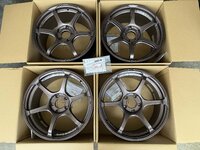
original WedsSport SA70 18x9jj offset +32 5H pcd...
Started by
david tao
Chassis and Wheels
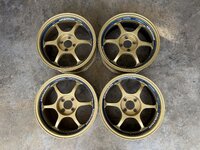
BRAND NEW original rare Yokohama ADVAN Racing RG4...
Started by
david tao
Chassis and Wheels
original rare Yokohama ADVAN Racing RZ2 RZii...
Started by
david tao
Chassis and Wheels
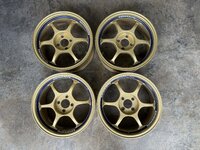
original rare Yokohama ADVAN Racing RG 16x7jj...
Started by
david tao
Chassis and Wheels
original rare Yokohama ADVAN Racing RG 16x7jj...
Started by
david tao
Chassis and Wheels
original rare Rays Volk Racing TE37SL 18x9jj offset...
Started by
david tao
Chassis and Wheels
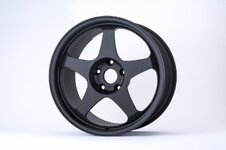
Spoon Sw388 18x10J+40 5H120 Rim Rims Civic FL5 Type R
Started by
aycy
Chassis and Wheels
Spoon Crane Neck Wing Carbon Spoiler GT Wing Honda...
Started by
aycy
Exterior and Body
Honda Jazz/Fit GK Mugen body kit
Started by
jeff6126
Exterior and Body
Posts refresh every 5 minutes
WTB: ER34 4Dr window visors
Hi. I am looking for the window visors of the 4Dr R34 GTT. Does anyone have any contacts to obtain them? New/used will be fine.
Thank you.
S15 Complete Dashboard
S15 complete dashboard with wiring, air cond blower, cooling coil and dash meter.
Can fit S13 & S14. Fit nicely... dont need any cutting on the door panel.
Condition: very good
Selling for Rm1600
Pls...
About Turbo's Q.
actually i juz starting decide modify my car,
so many things than i dunno.
i would like to ask,
i always see the turbo got 0.2bar 1.4 bar 4.0 bar....
what is it?pressure?
Recent Posts
Recommendation: Turbocharger for 4B11 N.A engine
Started by
Mitevo7
Car Modification
2026 Vios HEV launched with Local Battery Assembly - UMW Toyota Motor
Started by
The_Mechanic
News and Features
SPPF: The Future of Automotive Surface Protection - A Technical Overview
Started by
The_Mechanic
News and Features
Upping Wira 1.5 MMC performance
Started by
Nyfka
Car Modification
Volvo Malaysia Launches Locally Assembled ES90 Electric Sedan
Started by
The_Mechanic
News and Features
Search
Online now
Enjoying Zerotohundred?
Log-in
for an ad-less experience
Home
Forums
Main Forums
General Talk
Isuzu 4x4