Menu
Home
Post Something
Forums
Current Activity
New posts
Search forums
What's new
New posts
Latest activity
News & Features
The Marketplace
Cars for Sale
Engine and Performance
Chassis and Wheels
Exterior and Body
Interior and Cockpit
ICE - In Car Entertainment
Car Shops and Services
Toys and Wares
All Other Stuff
Jobs and Vacancies
Looking For
Members
Log in
Register
What's new
Search
Search
Search titles only
By:
Current Activity
New posts
Search forums
Menu
Log in
Register
Reply to thread
See what others are reading now! Try Forums >
Current Activity
Home
Forums
Car Brands
Car Manufacturers
Euro
VW Beetle Custom & Performance
JavaScript is disabled. For a better experience, please enable JavaScript in your browser before proceeding.
You are using an out of date browser. It may not display this or other websites correctly.
You should upgrade or use an
alternative browser
.
Message
<blockquote data-quote="vwmania" data-source="post: 1876050" data-attributes="member: 8882"><p>Tech Tips</p><p></p><p>Tech Tip #1 Improve your 1st/2nd Shift Fork Adjustment </p><p></p><p>If you are not getting good results during your shift fork adjustments, here are some things to consider. In approximately 1966 Volkswagen started producing 1-2 sliders which were 25mm wide instead of the previous 26mm type. They also added .50mm more space on either side of the center detent depression on the 1-2 shift rails, thus producing 1mm greater travel. This made up for the 1 mm less sleeve thickness and resulted in more shifter throw and a more positive shift. This updated shift rail can be identified by a large groove on the hockey stick end of the rail. The first 25mm wide sleeves found in US production can be identified by a single groove down the center of the reverse teeth (mid 66). From 67-71 the sliders will have 2 grooves on the tips of the reverse teeth and continue to be 25 mm wide. The 1-2 shift rails with the correct detent layout for 25mm sliders are available from Long Enterprises. Order part# 113 311 557B. </p><p></p><p>Tech Tip #2 Synchros: 110° vs 120° Face Angles</p><p></p><p>Question: "What is the difference between synchros with the 3 notches on the side (i.e. 113 311 269B and 113 311 295D) and the ones without (i.e. 113 311 269A and 113 311 295A)? </p><p></p><p>Answer: The short answer is the 113 311 269B and 113 311 295D synchros with three notches on the sides have 120° face angles and the 113 311 269A and 113 311 295A (no notches) have 110° face angles. </p><p></p><p>Let me explain... The 113 311 269B and 113 311 295D have synchronizer teeth with 120° degree face angles. When these synchros were first introduced the face angles on the engagement teeth of the sliders were also changed to 120°. The additional 10° more gradual angle provided improved shifting. The first 1-2 slider with 120° face angles on the 2nd gear side engagement teeth was introduced in late 1971. This 1-2 slider can be identified by an annular groove on the shoulder next to the shift fork slot and by 2 small grooves on the tips of the reverse teeth. It has 120° angles on the 2nd gear side only and therefore requires a 113 311 269B (120°) on 2nd gear and a 113 311 269A (110°) on 1st gear. The 113 311 255C 1-2 slider (1972-75, 5mm wide shift fork style), requires this same synchro arrangement with a 113 311 269A on 1st and a 113 311 269B on 2nd gear.</p><p></p><p>The first 3-4 slider with 120° face angles on the engagement teeth was introduced at the same time (late 1971) and can be identified by two annular grooves, one on either side of the shift fork slot. This 3-4 slider requires a 113 311 295D synchro (120°) on both 3rd and 4th gears. The 002 311 315 3-4 slider (72-75, 5mm wide shift fork slot style) uses the 113 311 295D synchro on 3rd and 4th also. If this all seems a bit confusing consider ordering one of our Rebuild Kits where the correct synchros are already included.</p><p></p><p>One word of caution, for those of you who like to use used synchros over again....if you happen to put a 113 311 269 (narrow shift plate or "key" slots, 1st gear only in early 002 buses) on 2nd, the gear box will grind so bad it'll make you think you didn't put a synchro in at all!</p><p></p><p></p><p>Tech Tip #3 Gear Ratio Formula:</p><p></p><p>To calculate mph in any </p><p>gear here is the formula: RPM X 1/2 TIRE HEIGHT = MPH </p><p>GEAR RATIO X RING & PINION X 168 </p><p></p><p></p><p>Tech Tip #4 Do I have early or late synchros?</p><p></p><p>Question: How can I tell if I have early or late synchros in my swing axle trans?</p><p></p><p>Answer: If you have early synchros your 1st gear synchro will only fit on 1st. If that is the case, then 2nd, 3rd, and 4th gear synchros are all the same. If you have late synchros then your 1st gear synchro, will fit on 2nd gear and visa-versa. If that is the case then 3rd & 4th gear synchros are the same. </p><p></p><p>EARLY swing-axle trans (pre-1966)</p><p>113 311 247A 1st gear synchro only, (smaller ID)</p><p>113 311 295A 2nd, 3rd and 4th gear synchro</p><p></p><p>LATE swing axle trans (1966-1968)</p><p>113 311 269A 1st & 2nd gear synchro </p><p>113 311 295A 3rd & 4th gear synchro</p><p></p><p>Note: Early first gears (61-63) with 11.75 mm wide gear teeth should not be used in any kind of performance application. Try to use 1st gears with 13.5 mm wide gear teeth and corresponding wider 1st gear on the mainshaft. The later gears (66-on) also have wider thrust surfaces on the ends which contact the 1st/2nd clutch gear and are less prone to galling and failure. If you would like to upgrade to these later style gears contact us and we can tell you what you need.</p><p></p><p>Tech Tip #5 Upgrade your leaky shift housing (nose cone)</p><p></p><p>If your transaxle is fitted with a 1966 or earlier shift housing chances are you've experienced oil leaking from the area where the shift lever (hockey stick) exits the front of the housing. Until now there hasn't been any way to install an oil seal in the early housings as the outer internal bushing is located all the way at the end thus leaving no room for the type of bushing that carries a seal. We now have an extremely high quality bushing that replaces the old split bushing at the outer end and carries a seal! Order part # 001 301 209A </p><p>Also as long as you've got the shift housing off it's a good idea to perform a simple factory modification. What's involved is removing a little bit of metal from the baffle in front of the channel leading to the vent hole (in later housings you can see that this area is opened up considerably). This can be done by cutting a small (approx 1/2 inch) V shaped notch in the baffle thereby avoiding a pressure build-up that cause an even a bigger oil leak out the vent hole! </p><p></p><p>Tech Tip #6 Prevent spinning drive hubs</p><p></p><p>For stock transaxle rebuilds we recommend you press off 3rd and 4th drive hubs and check for any signs of spinning. If evidence of spinning is found both the gear and the drive hub will need to be replaced. If they look good and the engagement teeth are in good shape, green locktite before reinstalling (see LE 180 VW Transaxle Rebuilders Course CD for information on tooth geometry and other details on this procedure). For performance or off road use, Long Enterprises can Tig weld your drive hubs for you. We then put the gear on a precision industrial honing machine to insure the bore is correct. Order LE 108 for new or excellent used replacement drive hubs.</p></blockquote><p></p>
[QUOTE="vwmania, post: 1876050, member: 8882"] Tech Tips Tech Tip #1 Improve your 1st/2nd Shift Fork Adjustment If you are not getting good results during your shift fork adjustments, here are some things to consider. In approximately 1966 Volkswagen started producing 1-2 sliders which were 25mm wide instead of the previous 26mm type. They also added .50mm more space on either side of the center detent depression on the 1-2 shift rails, thus producing 1mm greater travel. This made up for the 1 mm less sleeve thickness and resulted in more shifter throw and a more positive shift. This updated shift rail can be identified by a large groove on the hockey stick end of the rail. The first 25mm wide sleeves found in US production can be identified by a single groove down the center of the reverse teeth (mid 66). From 67-71 the sliders will have 2 grooves on the tips of the reverse teeth and continue to be 25 mm wide. The 1-2 shift rails with the correct detent layout for 25mm sliders are available from Long Enterprises. Order part# 113 311 557B. Tech Tip #2 Synchros: 110° vs 120° Face Angles Question: "What is the difference between synchros with the 3 notches on the side (i.e. 113 311 269B and 113 311 295D) and the ones without (i.e. 113 311 269A and 113 311 295A)? Answer: The short answer is the 113 311 269B and 113 311 295D synchros with three notches on the sides have 120° face angles and the 113 311 269A and 113 311 295A (no notches) have 110° face angles. Let me explain... The 113 311 269B and 113 311 295D have synchronizer teeth with 120° degree face angles. When these synchros were first introduced the face angles on the engagement teeth of the sliders were also changed to 120°. The additional 10° more gradual angle provided improved shifting. The first 1-2 slider with 120° face angles on the 2nd gear side engagement teeth was introduced in late 1971. This 1-2 slider can be identified by an annular groove on the shoulder next to the shift fork slot and by 2 small grooves on the tips of the reverse teeth. It has 120° angles on the 2nd gear side only and therefore requires a 113 311 269B (120°) on 2nd gear and a 113 311 269A (110°) on 1st gear. The 113 311 255C 1-2 slider (1972-75, 5mm wide shift fork style), requires this same synchro arrangement with a 113 311 269A on 1st and a 113 311 269B on 2nd gear. The first 3-4 slider with 120° face angles on the engagement teeth was introduced at the same time (late 1971) and can be identified by two annular grooves, one on either side of the shift fork slot. This 3-4 slider requires a 113 311 295D synchro (120°) on both 3rd and 4th gears. The 002 311 315 3-4 slider (72-75, 5mm wide shift fork slot style) uses the 113 311 295D synchro on 3rd and 4th also. If this all seems a bit confusing consider ordering one of our Rebuild Kits where the correct synchros are already included. One word of caution, for those of you who like to use used synchros over again....if you happen to put a 113 311 269 (narrow shift plate or "key" slots, 1st gear only in early 002 buses) on 2nd, the gear box will grind so bad it'll make you think you didn't put a synchro in at all! Tech Tip #3 Gear Ratio Formula: To calculate mph in any gear here is the formula: RPM X 1/2 TIRE HEIGHT = MPH GEAR RATIO X RING & PINION X 168 Tech Tip #4 Do I have early or late synchros? Question: How can I tell if I have early or late synchros in my swing axle trans? Answer: If you have early synchros your 1st gear synchro will only fit on 1st. If that is the case, then 2nd, 3rd, and 4th gear synchros are all the same. If you have late synchros then your 1st gear synchro, will fit on 2nd gear and visa-versa. If that is the case then 3rd & 4th gear synchros are the same. EARLY swing-axle trans (pre-1966) 113 311 247A 1st gear synchro only, (smaller ID) 113 311 295A 2nd, 3rd and 4th gear synchro LATE swing axle trans (1966-1968) 113 311 269A 1st & 2nd gear synchro 113 311 295A 3rd & 4th gear synchro Note: Early first gears (61-63) with 11.75 mm wide gear teeth should not be used in any kind of performance application. Try to use 1st gears with 13.5 mm wide gear teeth and corresponding wider 1st gear on the mainshaft. The later gears (66-on) also have wider thrust surfaces on the ends which contact the 1st/2nd clutch gear and are less prone to galling and failure. If you would like to upgrade to these later style gears contact us and we can tell you what you need. Tech Tip #5 Upgrade your leaky shift housing (nose cone) If your transaxle is fitted with a 1966 or earlier shift housing chances are you've experienced oil leaking from the area where the shift lever (hockey stick) exits the front of the housing. Until now there hasn't been any way to install an oil seal in the early housings as the outer internal bushing is located all the way at the end thus leaving no room for the type of bushing that carries a seal. We now have an extremely high quality bushing that replaces the old split bushing at the outer end and carries a seal! Order part # 001 301 209A Also as long as you've got the shift housing off it's a good idea to perform a simple factory modification. What's involved is removing a little bit of metal from the baffle in front of the channel leading to the vent hole (in later housings you can see that this area is opened up considerably). This can be done by cutting a small (approx 1/2 inch) V shaped notch in the baffle thereby avoiding a pressure build-up that cause an even a bigger oil leak out the vent hole! Tech Tip #6 Prevent spinning drive hubs For stock transaxle rebuilds we recommend you press off 3rd and 4th drive hubs and check for any signs of spinning. If evidence of spinning is found both the gear and the drive hub will need to be replaced. If they look good and the engagement teeth are in good shape, green locktite before reinstalling (see LE 180 VW Transaxle Rebuilders Course CD for information on tooth geometry and other details on this procedure). For performance or off road use, Long Enterprises can Tig weld your drive hubs for you. We then put the gear on a precision industrial honing machine to insure the bore is correct. Order LE 108 for new or excellent used replacement drive hubs. [/QUOTE]
Insert quotes…
Verification
Post reply
The Marketplace Latest
New original Defi Advance A1 NA package triple...
Started by
david tao
Engine and Performance
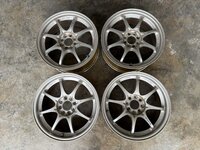
original rare Rays Volk Racing CE28 16x7jj offset...
Started by
david tao
Chassis and Wheels
Honda Jazz/Fit JSracing GTwing Spoiler
Started by
jeff6126
Exterior and Body
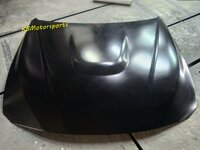
Toyota Vios NCP93 front bonnet hood
Started by
jeff6126
Exterior and Body
Honda civic fc varis spoiler
Started by
jeff6126
Exterior and Body
BMW F10 Msport front bumper set
Started by
jeff6126
Exterior and Body
BMW F30 M3/GTS front bonnet hood
Started by
jeff6126
Exterior and Body
BMW F10 vorsteiner rear bumper diffuser
Started by
jeff6126
Exterior and Body
Mitsubishi Lancer Evo bodykit
Started by
jeff6126
Exterior and Body
BMW F30 M3 front skirt lip
Started by
jeff6126
Exterior and Body
Posts refresh every 5 minutes

Time To Attack | Hall of Fame : Round 1 Sepang
Congratulations all listed drivers!, The Hall of Fame has finally been released. The scoreboard represents Time to Attack: Sepang...
18 " Volk Racing AV3 for Sale!!
Hi there. Selling off my rims. Specs:-
Front: 18x7.5 +44
Rear: 18x8.0 +43
PCD: 114.3
5 Holes
Intrested pls PM me. thanks
Bar and plate intercooler
i am surprise taht not many people know the benefit of bar and plate intercooler.Make it this way there is not many bar and plate intercooleer made by the famous brand u and i know but in us bear in mind they modify...
Recent Posts
Darker Design : Mercedes-Benz Launches GLA Nightfall Edition in Malaysia
Started by
The_Mechanic
News and Features
Honda Malaysia Doubles Down on Hybrids: New CR-V Launches with Dual e:HEV...
Started by
The_Mechanic
News and Features
BateriHub Reaches 200-Store Milestone, Becomes Malaysia’s Largest...
Started by
The_Mechanic
News and Features
Been stalking for 3 years edy
Started by
dheepadarshan95
Introduction and Newbies
Recommendation: Turbocharger for 4B11 N.A engine
Started by
Mitevo7
Car Modification
Search
Online now
Enjoying Zerotohundred?
Log-in
for an ad-less experience
Home
Forums
Car Brands
Car Manufacturers
Euro
VW Beetle Custom & Performance