JL Audio : The Mini V2

dinesh_hardcore

Known Member
Senior Member
Joined
Oct 19, 2004
Messages
61
Points
3,006
Location
Subang Jaya
The Vehicle: 1961 Austin Mini

Country of Origin: Great Britain

Engine: 1100cc inline 4-cylinder (from mid-70's Mini)

Gearbox: 4-speed Manual

Layout: Transversely mounted front engine / front-wheel drive

Horsepower: 50 bhp at 5,100 RPM

Torque: 60 lb.ft. at 2,500 RPM

Length: 123 inches

Width: 55.5 inches

Height: 53 inches

Curb Weight (before installation): 1,250 lbs.

Curb Weight (after installation): considerably more
 
PROJECT NAME:
Mini v2

PROJECT GOALS:
1) To create a convincing multi-channel audio listening experience for two people
2) To integrate video in a manner that enhances the listening experience
3) To showcase the technology and performance capabilities of JL Audio's premier products
4) To exceed the impact created by the original JL Audio Mini show car

PROJECT TEAM: (all JL Audio employees)

Mechanical Fabrication and Project Leader:
Gary Martin

Interior Design and Fabrication:
Bill Hamze, Franklin Rodriguez, Hector Yanez

Installation Help:
Jim Clayton, Rene Espinosa, Johnny McFarlane, Jason Sayen, Jeremy Dawson

Machining:
Dave Tibbetts

System Concept:
Manville Smith

System Tuning:
Manville Smith, Steve Turrisi, Carl Kennedy
 
JL AUDIO EQUIPMENT:

Speaker System:
Three (3) JL Audio ZR650-CSi component systems (left/center/right front channels)
Two (2) JL Audio XR650-CXi coaxial speaker systems (left/right surround channels)
Two (2) JL Audio 12W6v2 12-inch Subwoofer Drivers

Amplifier System:
One (1) JL Audio 1000/1 Monoblock Subwoofer Amplifier
One (1) JL Audio 450/4 Four-Channel Amplifier (in 3-channel mode)
One (1) JL Audio 300/2 Two-Channel Amplifier (in stereo mode)
Total Power: 150 x 5 to satellites plus 1000 x 1 to subwoofers (1,750 Watts)

Connection System:
JL Audio Engineered Connection Systems products (power, signal and speaker connections)
 
MAJOR EXTERIOR MODIFICATIONS:

Wide body kit and wheel wells fabricated to accept 13-inch wheel/tire upgrades

Custom motorized hood fabricated to accept 22-inch LCD monitor

Front clip modified to accept motorized hood

Custom trunk lid fabricated to accept motorized amplifier rack system

Adjustable rear suspension installed to cope with system weight

Custom exhaust system fabricated to clear motorized amp rack

Custom aluminum fuel tank fabricated to create space for amp rack

Bodywork and Paint by James McHugh

Special thanks to Seven Enterprises for helping us sort out the myriad of issues surrounding these modifications and for procuring original Mini parts for the project.
 
WHEELS:

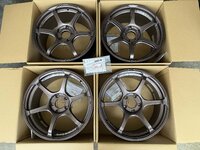
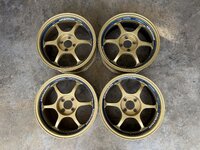
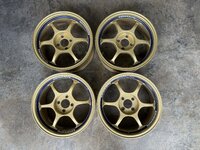
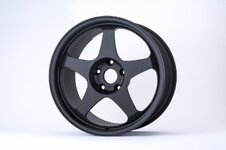
DAVIN WHEELS came through in a major way by custom-machining the world's only set of 13-inch DAVIN StreetSpin wheels for the Mini v2.

Yes, they are spinners and they look amazing!

A big thank-you to everyone at DAVIN for their participation in this project.
 
In this shot of the Mini v2 taken at the 2004 Spring Break Nationals we see the motorized hood opened, revealing the 22-inch LCD monitor on its underside.

To accomplish this task, Gary Martin constructed a sturdy elevator and hinge system using tubular steel, bearings and custom machined parts. The mechanism is serviceable by removing the car's grille and consists of three linear actuators (two to lift and one to pivot). The original hood mechanism hinged at the rear, not the front. The front clip was also modified to create a new cut-line for the hood and the original seams were filled and smoothed.
 
In this view we see the ACCELEVISION LCD monitor operating on the underside of the hood. It not only looks cool, but it really makes the whole listening experience better by pulling the viewer/listener's mind beyond the cabin's front boundary.

When shown, a matte black cover is placed over the engine compartment to reduce screen glare. The engine is under the cover and is fully functional. When we need to move the vehicle, we remove the matte-black cover and place an aluminum plate over the screen to replace the aluminum frame. This protects the screen from heat and from the various fluids that 1960's British automobiles like to spray out on occasion.
 
In this overview of the front of the cabin we can see the front speaker system and the incredible fabrication and upholstery work done by JL Audio's Bill Hamze and Franklin Rodriguez.

Each front woofer resides in its own 0.5 cubic foot sealed fiberglass enclosure. The left and right woofer enclosure are located behind the front tires in the fender wells, while the center woofer's enclosure is located behind the visible dash surface. The three front tweeters are mounted on a stainless-steel bar which spans across the top of the dash surface.

Left to Right woofer path length differentials are quite minimal in this setup (around 4 inches). The center woofer is actually closer, but this is easily addressed using the processor's center channel delay function without compromising either seat's soundstage. Tweeter placement was arrived at through listening evaluations. Even though the tweeter placement results in greater left/right pathlength differences than the woofers, this proved to be the best compromise in terms of soundstage height and stability.
 
In this closeup view of the dash area we can see the center woofer and head unit installation. Each woofer is trimmed with a machined aluminum flange and stands proud of its general mounting area to minimize diffraction effects. Blue electroluminiscent film (EL) lighting accents the dash and door sills. The dash (and the whole interior) is finished in UltraSuede and UltraLeather materials.

Notice that the underside of the dash is completely uncluttered and open to prevent blocking the sound from the left and right woofers.

Alpine's excellent DVA-7996 DVD player resides in a custom built head unit mount and is the operational center of the system. The head unit can also be controlled wirelessly utilizing a Philips Pronto Pro RF remote controller. An Alpine PXA-H700 multi-channel processor (not pictured) provides surround decoding, channel delay, crossover and equalization functions.
 
In this alternate view of the interior you can see the custom low-profile center console. This piece was built with two-part foam which was formed and then skinned with thin fiberglass. This technique results in very strong and very lightweight parts and was also used to construct the floor panels and the headliner shell of the Mini v2.

Extensive aluminum brightwork is evident throughout the interior to highlight the various surfaces. Air vents and the shifter boot/flange were "borrowed" from the Audi TT. All other metal parts were fabricated by Dave Tibbetts in JL Audio's machine shop.

DYNAMAT brand materials from Dynamic Control were used throughout the Mini v2 for sound deadening and absorption. A big thank-you goes out to Dynamic Control for their generous participation in this and all other JL Audio show car projects.
 
Rolls-Royce wool carpet inserts (insanely expensive, but beautiful) lay flush with the UltraLeather-trimmed. foam/fiberglass composite floor panels. These floor panels fit into the car precisely and are isolated from the sheetmetal floor with felt and Dynamat materials.

In this view, you can also see the gauges mounted to the back edge of the hood. These waterproof gauges were custom made for the project by the fine folks at Dakota Digital and trimmed with machined rings.

A period-correct Motolita alloy steering wheel completes the package.
 
This view really shows the degree of fit and finish achieved in this installation. Note how the floor panels, door sills, door panels and kick panels integrate.

You can also see the thick padding on the upper part of the door panel which was necessary to control reflected acoustic energy.
 
Turning around to face the rear of the cabin, we now can see the two 12W6v2 subwoofers, the surround speakers and the rear of the overhead console.

The subwoofers are each enclosed in a 1.5 cu.ft. enclosure. These enclosures have the unique ability to operate as sealed or ported designs via a motorized valve which opens or closes the interior mouth of the port. The port exits are located behind the seats at the bottom of the enclosures. The enclosures are constructed of fiberglass and MDF and securely mounted to a tubular steel structure in the rear of the car.

The surround speakers each operate in individual 0.3 cu.ft. sealed enclosures. The main volume is actually located on the sides of the subwoofer enclosure and connected to the speaker locations via ducts built into the C-pillar panels.

The overhead console houses the IR sending unit for the Philips Pronto Pro remote control system. A pair LED cluster spotlights is also built into the headliner to light the subwoofers.
 
Because of the small dimensions of the interior, the subwoofers and surround speakers are actually closer to the listener's ears than the front speaker system. To overcome this, the processor's delay functions were used to align the arrival time with the front speaker system.

Custom-machined JL Audio badges add a nice touch to the seats. The black oval structure is actually stuffed with spongy foam to help absorb reflections.
 
The amplifier rack was a big challenge, overcome with equal parts ingenuity and sweat.

Because we needed to house three big amplifiers in a limited amount of space and in a manner which was show-worthy, the decision was made to motorize the amplifiers and trunk lid. At the push of a button on the remote control, the trunk lid and amp rack slide back and then the trunk lid pivots downward. Once the trunk lid is all the way down, the 1000/1 and 450/4 amplifiers slide further out until they form a staircased display.

To accomplish this, Gary Martin designed and fabricated a fiendishly complex steel structure and industrial-slide system, powered by gear motors with chain drives and custom-built linear actuators. Wire and cable routing was also a huge challenge within the mechanism. The car's battery is actually housed under the amplifiers on a custom fabricated steel cage.

Gary's motto is "measure, then measure again, then measure some more... then build."
 
Here is an overhead view of the staircased amplifiers.

We can also see a cast acrylic bubble with the inset aluminum JL Audio logo inside the rear window of the car. This part was created by Bill Hamze using a high pressure vessel and castable acrylic resin. (Don't try this at home.)
 
After three long days of demonstrations at CES 2004, the installation team was honored by Car Sound and Performance magazine with two "Editor's Choice" awards:

"Best Use of Materials"
and
"Best Sounding Vehicle"


Standing between the attractive ladies, from left-to-right are Bill Hamze, Rob Hephner (editor of Car Sound and Performance), Hector Yanez and Gary Martin.
 
On the final day of CES 2004, the Mini was proudly displayed with the two "Editor's Choice" trophies and continued to wow show attendees with its amazing sound quality.

We're happy to say that we accomplished all the goals set forth at the onset of the project. The Mini v2 will be used as a JL Audio show car for several years to come.

If you ever get a chance to see it in the flesh, make sure you ask for a demo. We didn't build the car to sit there looking pretty, we built it to showcase the sound quality of our products.
 

Posts refresh every 5 minutes


Search

Online now

Enjoying Zerotohundred?

Log-in for an ad-less experience