Many people in the performance world often neglect upgrading their brakes. This is a common mistake. Often you'll see people concentrating on making there cars faster and handling better, but these people fail to realize that there brakes need upgrading to. Shorter brake distances can mean the difference between a trip to the bodyshop or not.
Luckly for us the Suzuki Swift GTi already comes with good brakes from the factory that many other cars would envy. The front disc's are a massive 9.8" in diameter and the rears are 9.3". This is fairly big for a car that weighs in around 1800lbs. For example the U.S Nissan 240Sx (aka Silvia) comes with 10.2" rotors up front and that car roughly weighs close to 3000lbs!. As good as the GTi brakes are, like most things they can always be improved on. With this in mind let's see what you should upgrade first.
Luckly for us the Suzuki Swift GTi already comes with good brakes from the factory that many other cars would envy. The front disc's are a massive 9.8" in diameter and the rears are 9.3". This is fairly big for a car that weighs in around 1800lbs. For example the U.S Nissan 240Sx (aka Silvia) comes with 10.2" rotors up front and that car roughly weighs close to 3000lbs!. As good as the GTi brakes are, like most things they can always be improved on. With this in mind let's see what you should upgrade first.
Stage 1
The first thing to do is make sure you are using a high quality brake fluid. Get at least DOT 4 or DOT 5 spec. The higher the dry and wet boiling points the better. There are many types of different brands of fluids available and discussing which brand to buy is beyond the scope of this article. Of course you might want to hold off on changing the fluid if you are going to do stage 3.
Stage 2
At this point it is a good idea to get hi performance pads. Generally these pads come with a higher coefficient of friction. Thus they will stress your rotor more, but will provide a greater bite on the rotor when braking. They will also last longer than stock pads on cross drilled or slotted rotors. If you drive your car on the street, stay away from the 'race' pads, since these tend to take time to heat up to work properly. Overall we feel the original Suzuki Semi-Metallic pads are very good, so if you can't get the performance pads easily stick to the oem pads.
Stage 3
One of the best bangs for the buck are Stainless Steel brakes lines. Under heavy use you can begin to feel your GTi brakes start to fade. The stainless steel lines help minimize this effect. On stock brake lines, once the fluid starts to heat up(boil) the rubber will tend to expand a bit. This causes brake 'energy' to be lost and the pedal to become spongy. The Stainless lines help offset this effect and keep the pedal nice an firm, by wrapping braided metal over the brakelines.
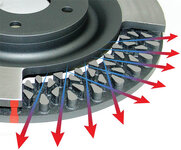
Stage 4Now that you have all your fluids energy going to the caliper, its time to upgrade your rotors to better handle the extra heat. There are three choices you can make when it comes to selecting hi performance rotors. The first is getting cross drilled rotors. This involves drilling the rotors in a optimized pattern to help cool the rotors and expel heat. Reduced brake dust is also a good side benefit. Most good quality cross drilled use chamfered holes. With cross drilled rotors heat can more easily escape the rotor and the holes permit brake gas's to escape much easier.
Another choice is getting Slotted rotors. This involves the manufacturer making grooves or slots on the rotor surface. These slots also help cool the rotors and as another benefit they ensure that everytime you brake the pad is 'cleaned'. This will let you get a better bite and help shorten brake distances. Slotted rotors like cross drilled rotors also help expel brake pad gases. These gases can make it harder for the pad to make contact with the rotor. Like cross drilled, slotted rotors also help minimize brake dust, since most of the dust gets trapped in the slots
The third choice is a combination of having both drilled and slotted rotors. The improvements over the other two with this type is minimal.
Again as with handling the higher in stage you go the better your car will brake. If you do up to stage 4 you should be able to take about 13-16ft of your 60mph-0mph braking distance. Which puts your GTi into Porsche 911 Turbo braking range!. Also note the above steps are simply guidelines, you can do them in any order, however for maximum braking try and stick to them.