As it seems, there has been a need for another technical discussion on tuning theory. I think more and more questions arise why you run 12:1 afr vs. 13:1 or 14:1 or this certain ignition timing. Anyone can just find threads where such and such ran this ignition timing and this AFR. I think very few people know why you would run this certain AFR or Ignition timing.
Until now, i didnt want to get in depth of the reasons why, but to justify the reasons I recommend certain AFR's and Ignition timing, we will discuss it.
In order to really under stand this discussion, you will need to know a lot of mechanics of the engine. IE. the cycles the motor takes. i really dont want to take the time to go into detail for now, maybe later.
The name of the game to making power is making the burn duration when the peak combustion pressure occur around 16 degrees after top dead center. The reason you want this is because it creates the most force on the crankshaft at the optimum angle to produce the most power. Sometimes people refer to this as MBT (maximum brake torque) but i dont really use that term much.
So in order to do that, we need to know a few things. Our boosted application allows the cylinder w/ more dense charges.
Lets talk a bit about AFR's. Many people just see people running XX:1 Air Fuel Ratio, and thats what they go by. You have to look deeper into Heat Transfer theory to really understand what is going on here, and why you would run certain AFR's.
About 25 % of the air/fuel mixture energy is converted to work, and the remaining 75% must be transferred from the engine to the environment. .
Octane Levels
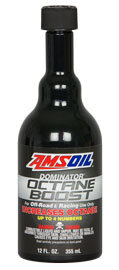
The octane number of a gasoline is NOT a measure of it's hotness or coolness in the burning process, and it is NOT a measure of how 'powerful' it is. The octane number is simply a measure of how good the gasoline resistance of detonation. This is a huge misconception. Higher octane fuels are better at controlling the decomposition into auto-ignition compounds than lower octane fuels. Many people think they can run higher octane fuel at leaner temps. well they are simply wrong.
this is some tip for u guys....
e-mail me if u want [email protected]
RB26 rocks...^^
Until now, i didnt want to get in depth of the reasons why, but to justify the reasons I recommend certain AFR's and Ignition timing, we will discuss it.
In order to really under stand this discussion, you will need to know a lot of mechanics of the engine. IE. the cycles the motor takes. i really dont want to take the time to go into detail for now, maybe later.
The name of the game to making power is making the burn duration when the peak combustion pressure occur around 16 degrees after top dead center. The reason you want this is because it creates the most force on the crankshaft at the optimum angle to produce the most power. Sometimes people refer to this as MBT (maximum brake torque) but i dont really use that term much.
So in order to do that, we need to know a few things. Our boosted application allows the cylinder w/ more dense charges.
Lets talk a bit about AFR's. Many people just see people running XX:1 Air Fuel Ratio, and thats what they go by. You have to look deeper into Heat Transfer theory to really understand what is going on here, and why you would run certain AFR's.
About 25 % of the air/fuel mixture energy is converted to work, and the remaining 75% must be transferred from the engine to the environment. .
Octane Levels
The octane number of a gasoline is NOT a measure of it's hotness or coolness in the burning process, and it is NOT a measure of how 'powerful' it is. The octane number is simply a measure of how good the gasoline resistance of detonation. This is a huge misconception. Higher octane fuels are better at controlling the decomposition into auto-ignition compounds than lower octane fuels. Many people think they can run higher octane fuel at leaner temps. well they are simply wrong.
this is some tip for u guys....
e-mail me if u want [email protected]
RB26 rocks...^^